How to Handle an After-Hours Dental Emergency Call as a New Dentist
Getting a dental emergency call after hours is disorienting when you're new. Here's a practical framework for triaging the call, deciding what actually requires you to go in, and managing the patient safely.
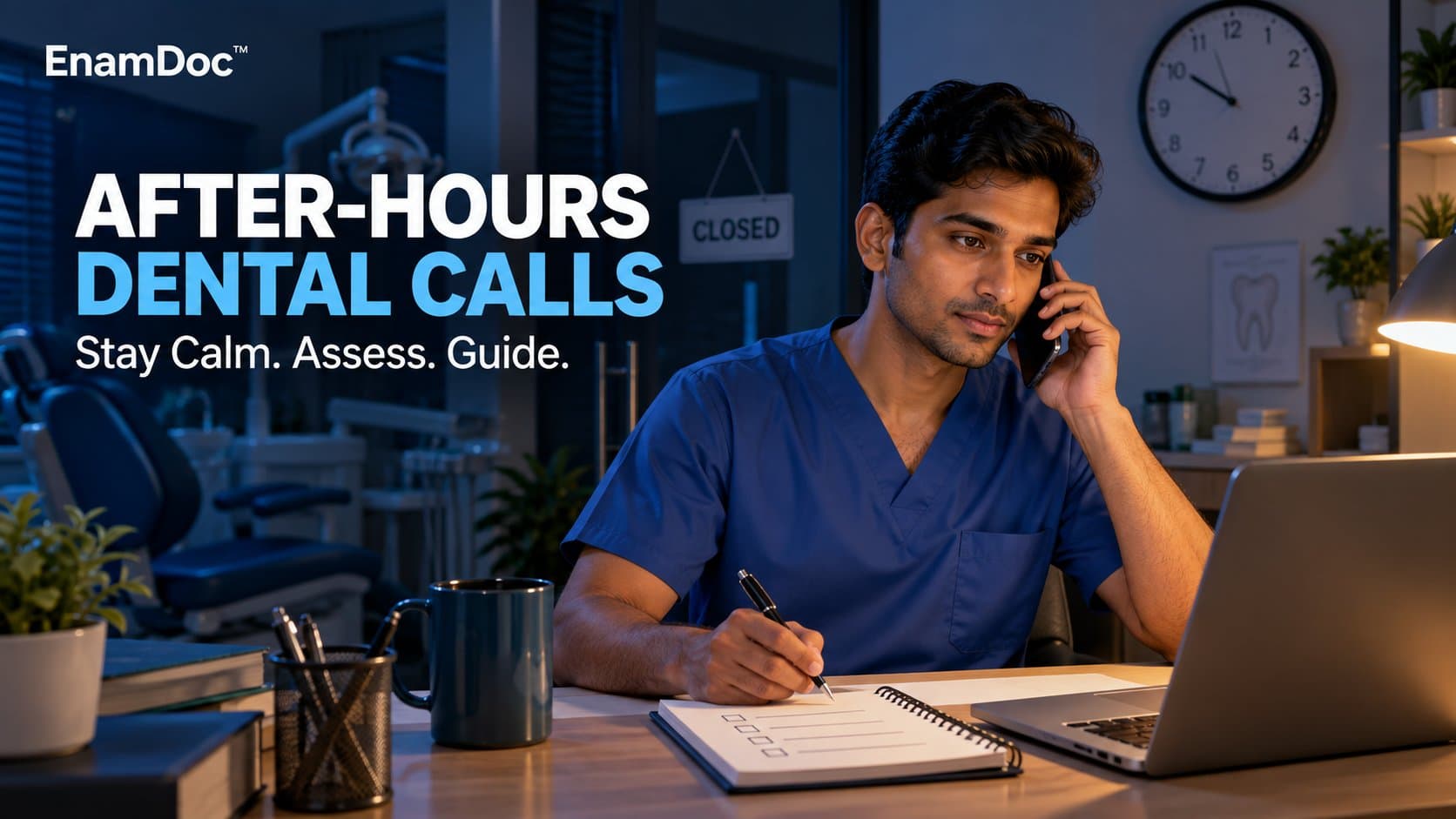
Your phone rings at 10 PM. It's a patient — they say their tooth is "killing them" and they "need to be seen tonight." You're three months into practice. Do you go in? Do you manage it over the phone? What do you actually ask them?
After-hours emergency calls are one of those situations no dental school fully prepares you for, because the skill isn't clinical — it's triage. This guide gives you a working framework for handling these calls from your first year in practice.
The Core Principle: Phone Triage Before Action
The first thing to accept is that not every after-hours call requires you to go in. Most can be managed with advice and an appointment the following morning. Your job on the call is to determine whether this is a true emergency that cannot wait — or something that feels urgent to the patient but is clinically manageable overnight.
This distinction is the skill. Getting it wrong in either direction has consequences: undertriage means a serious situation deteriorates; overtriage means you're managing every patient's anxiety at 11 PM and burning out in your first year.
What to Ask on the Call
Run through these questions in roughly this order:
1. Pain Assessment
- Where is the pain? (localised vs. diffuse)
- How long has it been going on? (acute onset vs. days of buildup)
- Is it constant or intermittent? (pulpal involvement is often constant)
- Does it wake them from sleep? (classic sign of irreversible pulpitis)
- Does cold or heat make it worse — and for how long? (lingering = pulpitis; brief = reversible)
- Is it throbbing or spreading to the jaw, ear, or neck?
2. Swelling Assessment
- Is there any visible swelling of the face, jaw, or neck?
- If yes — is it limited to the gum, or has it spread to the face?
- Can they open their mouth normally? (trismus is a red flag)
- Is there any difficulty swallowing or breathing? (this is the genuine emergency)
3. Trauma Assessment (if relevant)
- Did anything hit the tooth or cause an injury?
- Is a tooth loose, displaced, or knocked out?
- How long ago did it happen?
4. Current Medications
- Have they taken any pain relief? What and how much?
- Are they on anticoagulants, immunosuppressants, or bisphosphonates?
The Situations That Require You to See Them Immediately (or Direct to Emergency)
These are the presentations that cannot safely wait until morning:
- Facial cellulitis with trismus — swelling that has spread beyond the gum, with restricted mouth opening. This can progress rapidly and may require hospital-level management. Direct to the nearest emergency department if you cannot see them immediately and cannot call a senior colleague.
- Swelling with difficulty swallowing or breathing — Ludwig's angina presentation. This is a medical emergency. Call emergency services.
- Avulsed permanent tooth — the window for reimplantation is short (ideally under 30–60 minutes). See them. Give telephone advice on storage medium immediately (milk or saline, or keep in mouth).
- Post-extraction haemorrhage that isn't stopping — especially relevant if they're on anticoagulants. If direct pressure hasn't controlled it after 20–30 minutes, they need to be seen.
- Post-surgical complication from a procedure you performed that day — you should see these yourself regardless of time.
What Can Usually Wait Until Morning
These presentations are painful and distressing, but are not emergencies requiring immediate attendance:
- Acute pulpitis (irreversible) — severe, spontaneous, constant toothache. Pain is real and significant, but you cannot safely do a root canal at midnight without proper setup. Provide appropriate analgesic advice and book them first thing in the morning. NSAIDs (ibuprofen 400 mg) plus paracetamol 1000 mg, staggered, gives good pain coverage for most patients.
- Localised periapical abscess (no facial swelling) — this is a genuine dental infection but contained. Book an urgent appointment in the morning. If the patient is febrile and systemically unwell, reconsider.
- Lost crown, bridge, or filling — uncomfortable and sometimes sharp, but not an emergency. Temporary dental cement from a pharmacy can help overnight.
- Dry socket — extremely painful but not dangerous. Arrange a morning appointment for an obtundent dressing.
- Orthodontic wire causing irritation — can usually be managed with wax until the morning.
Giving Phone Advice Properly
When a patient can wait until morning, give them specific, actionable advice — not a vague "take some painkillers and call us in the morning." Be explicit:
- Name the medication (ibuprofen, paracetamol) and the dose, confirming they have no contraindications
- Tell them specifically what to watch for that would change the plan (spreading swelling, fever, difficulty swallowing, or breathing)
- Give them a specific appointment time the following morning, not just "we'll sort it out"
- Document the call in the patient's record: time, symptoms described, advice given, and follow-up arranged
That last point — documentation — matters. If a patient deteriorates overnight after a phone consultation, your records are what demonstrates you exercised reasonable clinical judgment.
When to Escalate
As a new dentist, you don't have to manage every after-hours call alone. Know in advance:
- Who your senior colleague or principal is and whether they're available for advice
- Which local hospitals have emergency dental provision
- What your practice's after-hours policy actually is
Calling a senior for a second opinion on a worrying presentation is not a sign of weakness — it's appropriate professional behaviour, and most experienced dentists will support this.
Using EnamDoc to Prepare
Having a patient's records accessible before or during an after-hours call makes triage significantly easier. When patients book through EnamDoc and their dental history is on record, you can quickly check prior prescriptions, existing conditions, anticoagulant status, and recent treatments — all of which affect how you manage the call. Digitised records are one of the small things that make emergency decisions faster and safer.
The Bottom Line
The skill in after-hours dental emergencies isn't always what you do in the chair — it's the quality of your phone triage. Clear questions, a calm manner, specific advice, proper documentation, and the judgment to tell genuine emergencies from painful-but-manageable situations will serve your patients and protect you professionally. Most of it comes with practice, but having a framework from your first week saves considerable anxiety.
Frequently asked
Frequently asked questions
What counts as a genuine dental emergency after hours?
Genuine after-hours dental emergencies that cannot safely wait until morning include: facial swelling that has spread beyond the gum (particularly with trismus or restricted opening); any swelling associated with difficulty swallowing or breathing (this requires emergency services); an avulsed (knocked-out) permanent tooth, where time to reimplantation matters; post-extraction haemorrhage not controlled by direct pressure after 20–30 minutes; and complications from a surgical procedure you performed that day. Severe toothache from pulpitis, while very painful, can usually be managed with strong analgesia overnight and a morning appointment.
What pain relief can I recommend to a patient over the phone?
For most dental pain in adults with no contraindications, the most effective over-the-counter regimen is ibuprofen 400 mg and paracetamol 1000 mg, taken together and repeated every 6–8 hours. This combination provides better analgesia than either alone. Tell the patient to take them with food if using ibuprofen, and confirm they have no contraindications: ibuprofen is avoided in patients with peptic ulcer disease, renal impairment, or those on anticoagulants; paracetamol is avoided at full dose in patients with liver disease. If they're already on regular medication, check for interactions. Codeine-based combinations are prescription-only in most contexts.
Do I have to document after-hours dental phone calls?
Yes — documenting after-hours calls is both good clinical practice and important professional protection. Record the time of the call, the symptoms the patient described, what you asked and advised, any medications recommended (with doses), and what follow-up you arranged. If a patient deteriorates overnight after a call where you judged the situation could wait until morning, your documentation is what demonstrates you made a reasonable clinical decision based on the information available. A brief contemporaneous note in the patient record is sufficient — write it as close to the call as possible.
- dental emergency
- after hours
- new dentist
- clinical practice
- patient management
Keep reading