How to Manage Dental Anxiety in Patients: Evidence-Based Techniques for Indian Dentists
Up to 75% of your patients experience some form of dental anxiety. Dr. Khanak Jain outlines the evidence-based communication and clinical techniques that reduce fear, improve cooperation, and build long-term patient loyalty in Indian dental practices.
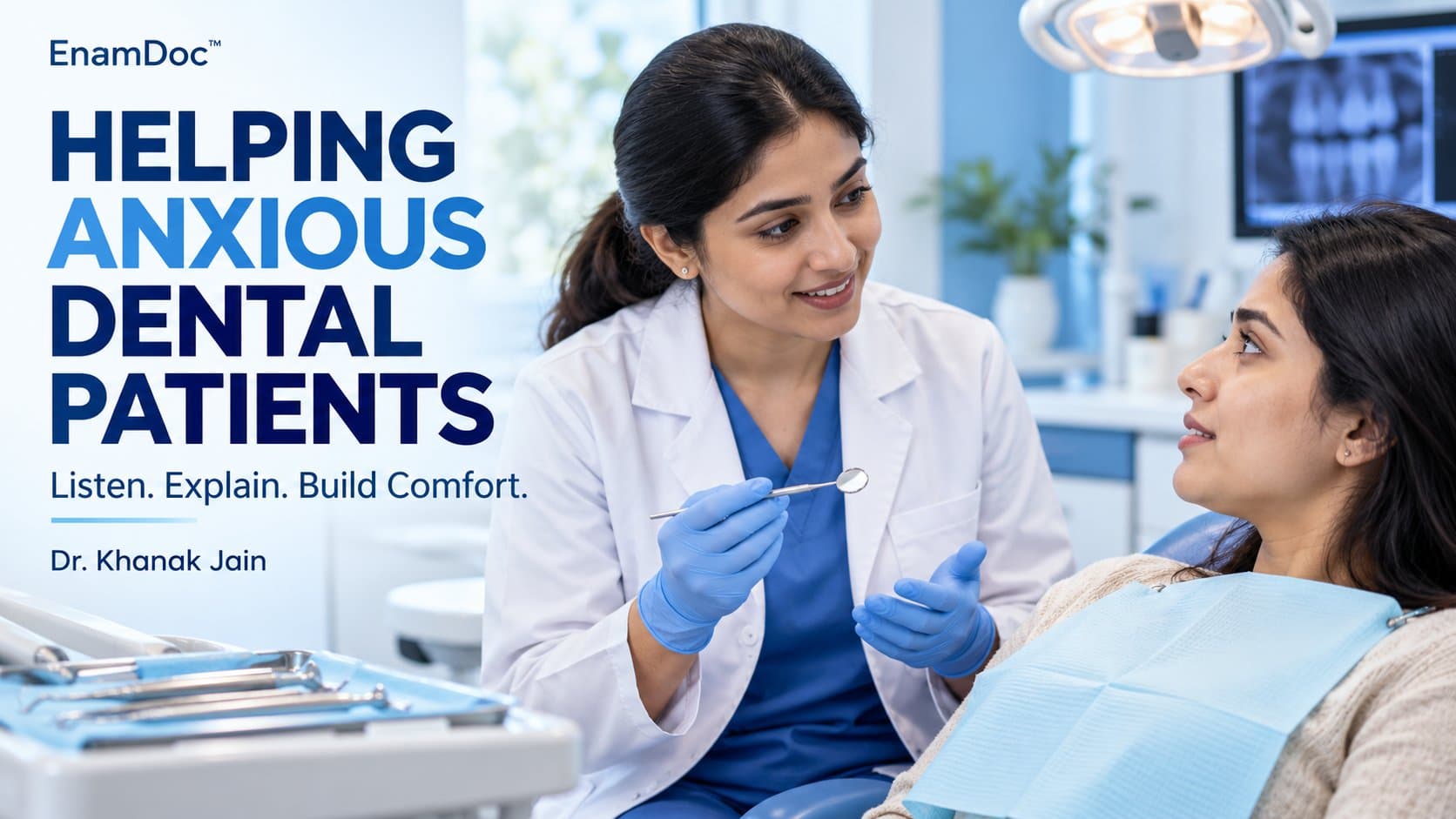
Dental anxiety is not a niche patient concern. Studies consistently estimate that 50–75% of patients experience some degree of fear about dental treatment, and roughly 10–15% have dental phobia severe enough to avoid care entirely. For Indian dentists running busy practices, this represents both a daily clinical challenge and a significant business problem: anxious patients cancel appointments, resist treatment, and rarely become loyal, referring patients.
The good news is that managing dental anxiety is a learnable clinical skill — not just a personality trait some dentists happen to have. This article outlines the evidence-based strategies that work in the real-world context of Indian dental practice.
Understanding What Dental Anxiety Actually Is
Before managing anxiety, it helps to understand it. Dental fear operates through multiple pathways:
- Conditioning — A single painful or humiliating experience, often in childhood, creates a conditioned fear response. This is the most common origin of dental phobia in Indian adults.
- Vicarious learning — Patients who grew up hearing family members describe dental procedures as painful arrive pre-primed with fear, even before their first bad experience.
- Disgust sensitivity — Some patients have a heightened sensitivity to blood, instruments, and clinical smells. This is neurological, not "overreacting."
- Loss of control — Lying back in a dental chair with instruments in your mouth, unable to speak or move, is genuinely uncomfortable for people with control-related anxiety.
- Fear of pain — Often rational, given that many patients have had inadequate anaesthesia in the past.
Identifying which pathway is driving a particular patient's anxiety allows you to choose the right intervention rather than applying a one-size-fits-all approach.
Communication Techniques That Actually Work
Tell-Show-Do
This is one of the most validated techniques in paediatric and anxious adult dentistry. Before doing anything, tell the patient what you are about to do in plain language, show them the instrument or demonstrate on their hand, then do the procedure. It reduces the element of surprise, which is often what triggers an anxiety spike.
Signal Control
Give the patient a way to stop the procedure at any time — usually a raised hand. This single intervention has significant evidence behind it. The knowledge that they can stop reduces anxiety by restoring a sense of control, and in practice, patients who feel in control rarely use the signal as much as patients who do not have it.
Avoid Loaded Language
Language choices matter more than most clinicians realise. Research in clinical communication consistently shows that "you'll feel a small pressure" is less anxiety-provoking than "you might feel a prick." Words like "needle," "drill," "cut," "pull" and "hurt" activate fear responses even in patients who are otherwise calm. Substituting neutral or positive language is not deception — it is accurate and less activating.
Pacing and Silence
Anxious patients often respond poorly to a fast clinical pace. Taking an extra 90 seconds to explain, allow a patient to settle, and confirm they are ready before proceeding reduces adrenaline levels measurably. Rushing communicates that their anxiety is an inconvenience. Pausing communicates that they are safe.
Empathic Validation
A short acknowledgement goes further than most dentists realise. "A lot of people feel nervous in the dental chair — it makes complete sense that you do" is not just bedside manner. It reduces shame, which is one of the factors that keeps anxious patients from attending at all. Patients who feel judged for their anxiety do not come back.
Clinical Strategies for High-Anxiety Procedures
Optimise Local Anaesthesia
The fear of pain during a procedure is often rational — it is based on past experiences of inadequate anaesthesia. Ensuring genuinely effective anaesthesia is the single most important clinical intervention for anxious patients. This means: using topical anaesthetic before injection, injecting slowly, waiting the full 3–5 minutes for the anaesthetic to take effect, and confirming profound anaesthesia before beginning. The extra five minutes this takes is worth several times its cost in patient trust.
Short Appointments, Achievable Goals
Breaking treatment into shorter appointments with clear, achievable goals reduces cognitive load on anxious patients and builds positive associations with the dental chair. A patient who finishes an appointment having had only an examination and a clean — and nothing hurt — is more likely to return for the restorative work they need.
Distraction Techniques
Ceiling-mounted TVs, music through headphones, and conversational distraction during low-demand procedural moments all have evidence for reducing perceived pain and anxiety. These are inexpensive to implement and most patients welcome them.
Nitrous Oxide Sedation
For moderate to severe dental anxiety, inhalation sedation with nitrous oxide and oxygen is safe, fast-acting, well-tolerated, and rapidly reversible. Patients remain conscious and cooperative, but the anxiolytic and analgesic properties significantly reduce distress. It is cost-effective to set up and can be the difference between keeping a phobic patient in treatment and losing them entirely.
The Anxious Patient as a Practice-Building Opportunity
Most Indian dentists see anxious patients primarily as a challenge to manage. It is worth reframing this. A patient who had severe dental anxiety and had a genuinely positive experience in your clinic becomes an exceptionally loyal patient and a powerful referral source. Their bar for satisfaction is lower — because they expected to suffer — and their gratitude when they do not is proportionally higher.
Practices that earn a reputation for being "good with nervous patients" fill appointment books through word of mouth in a way that most marketing spend cannot replicate.
Using Your Practice Management System Effectively
Patient anxiety notes need to be visible at every appointment, not buried in case notes. A practice management system that surfaces relevant patient flags — including anxiety levels, previous difficult experiences, or communication preferences — helps every member of your team approach that patient correctly from the moment they walk in the door.
EnamDoc allows you to log patient-specific communication preferences and clinical notes that are visible to reception, assistants, and clinicians at every visit — so the patient does not have to repeatedly explain their fears, and your team never inadvertently uses triggering language with a patient who has flagged it previously.
A Simple Anxiety Assessment Protocol
Consider screening every new patient with a simple two-question anxiety assessment during intake:
- "On a scale of 1 to 10, how nervous are you about dental treatment generally?"
- "Have you ever had a bad dental experience? If yes, can you tell me briefly what happened?"
This takes 90 seconds, gives you actionable information, communicates to the patient that you care, and allows you to adjust your approach before the first appointment begins. Patients with scores of 7 or above should be flagged for a slower, more communication-heavy first visit before any procedure is attempted.
Key Takeaways for Indian Dentists
Dental anxiety is common, manageable, and — when handled well — a genuine competitive advantage for your practice. The evidence points clearly toward: effective anaesthesia, patient control through signalling, non-threatening language, pacing, and empathic communication as the core toolkit. None of these requires expensive equipment. They require intentionality and practice. The clinicians who build this skill see better patient retention, fewer cancellations, and practices that grow through reputation rather than through advertising alone.
Frequently asked
Frequently asked questions
What is the most effective technique for managing dental anxiety in patients?
There is no single best technique — the most effective approach addresses the specific root cause of a patient's anxiety. However, the two interventions with the strongest evidence across all anxiety types are: (1) genuinely effective local anaesthesia (which removes the rational fear of pain), and (2) giving the patient a stop signal (which restores control). Combined with calm, non-threatening language and clear explanations using Tell-Show-Do, these form the core of evidence-based anxiety management.
Should I use nitrous oxide sedation for anxious patients in my Indian clinic?
Yes, nitrous oxide sedation is a strong option for moderate to severe anxiety in Indian clinics. It is safe, fast-acting (onset in 2–3 minutes), and fully reversible — patients drive home afterwards. It reduces both anxiety and pain perception without requiring IV access. The setup cost has come down significantly, and the chair-time savings from having a cooperative patient more than cover it. If you see frequent cancellations or white-coat refusals, nitrous oxide is worth the investment.
- dental anxiety
- patient management
- communication
- fear
- dentist tips
Keep reading