Why Do Gums Recede? Causes, Early Signs, and Non-Surgical Fixes
Discover what triggers gum recession—from aggressive brushing to periodontal disease—alongside early warning signs, non-surgical therapies, and modern restorative options.
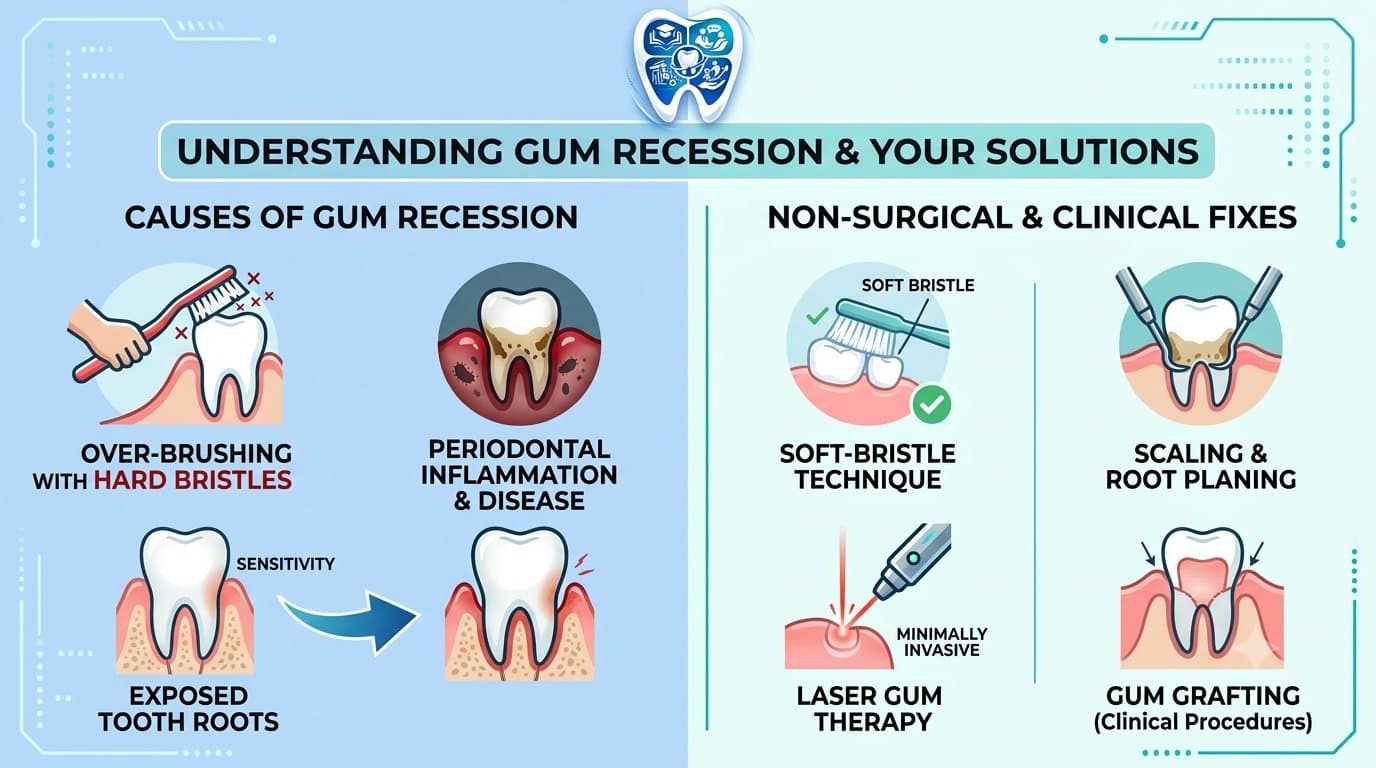
Gum recession occurs when the margin of the pink gum tissue surrounding the teeth pulls back or wears away, exposing more of the tooth structure or its underlying root. Because recession typically develops gradually over years, many individuals do not notice the shift until teeth begin looking longer or sudden sensitivity flares up with hot coffee or cold water.
Left unmanaged, receding gums can compromise the structural support of your teeth and lead to root decay, periodontal pocketing, and eventual tooth mobility. Understanding the root causes, early detection markers, and modern management pathways is critical to halting tissue loss early.
Primary Causes: Why Do Gums Pull Back?
Gum tissue does not regenerate on its own once lost. Several distinct mechanical, biological, and structural factors contribute to recession:
- Aggressive or Hard-Bristled Brushing: Scrubbing teeth horizontally with medium or hard bristles physically erodes delicate gingival tissue and wears away the thin enamel at the gumline.
- Periodontal Disease: Bacterial biofilm and tartar build-up beneath the gumline trigger chronic inflammation. As the body fights the infection, bacterial enzymes degrade the supporting connective tissue and alveolar bone.
- Bite Misalignment & Occlusal Trauma: Crooked teeth, uneven bite patterns, or nighttime teeth grinding (bruxism) place excessive, uneven mechanical forces on specific teeth, accelerating localized bone and tissue loss.
- Thin Gingival Biotype & Genetics: Some individuals naturally inherit thinner, more delicate gum tissue or shallow bone biotypes that are inherently more vulnerable to wear.
- Tobacco Use: Smoking and tobacco use reduce peripheral blood flow in gingival tissues, impairing the gums' ability to heal and resist bacterial infection.
Early Signs You Shouldn't Ignore
Detecting recession before the root is fully exposed makes non-invasive treatment far more effective. Watch for these early warning signs:
- Sudden Dentin Sensitivity: Sharp twinges when consuming cold drinks, hot soup, or sweet treats due to exposed microscopic root tubules.
- Teeth Appearing Longer: Visible lengthening of a tooth or an uneven gumline compared to neighboring teeth.
- A Visible "Notch" or Ridge: A small horizontal groove felt with your fingernail near the gumline where enamel transitions into softer cementum.
- Bleeding or Swollen Gums: Bleeding during routine brushing or flossing indicates underlying gingival inflammation.
Non-Surgical Fixes & Early Stage Interventions
When caught in mild or moderate stages, gum recession can often be stabilized without invasive surgery:
- Switching to Soft Bristles & Modified Bass Technique: Using an ultra-soft manual or pressure-sensing electric toothbrush angled at 45 degrees gently sweeps plaque away without traumatizing the gingival margin.
- Scaling and Root Planing (Deep Cleaning): Ultrasonic and hand instruments clean below the gumline, removing hardened tartar and smoothing root surfaces so gums can re-adapt closely to the tooth.
- Desensitizing Agents & Bonding: In-office fluoride varnishes, dentin sealers, or tooth-colored composite bonding cover exposed root surfaces, eliminating nerve sensitivity and preventing root abrasion.
- Custom Nightguards: Fabricated occlusal splints distribute bite pressure evenly and protect gums and bone from the damaging stresses of clenching or bruxism.
Modern Advanced & Surgical Options for Severe Recession
| Treatment Method | How It Works | Best Suited For |
|---|---|---|
| Laser Periodontal Therapy (LANAP) | Targeted dental lasers remove diseased tissue and kill deep bacteria while preserving healthy gums and encouraging natural reattachment. | Active periodontal pockets and infection-driven recession |
| Connective Tissue Grafting | A small piece of donor tissue (often from the roof of the mouth) is sutured over the exposed root to restore thick, protective gum coverage. | Moderate to severe root exposure with thin gingival tissue |
| Pinhole Surgical Technique (PST) | A minimally invasive method using a tiny pinhole entry to gently slide existing gum tissue down over the exposed root using collagen strips. | Multiple adjacent receding teeth with adequate tissue volume |
Protecting Your Gumline for the Long Run
While receded gum tissue cannot naturally regrow, timely preventative intervention halts the progression immediately. Maintaining daily gentle oral hygiene, wearing a nightguard if you clench, and visiting your dentist for routine bi-annual periodontal screenings protect both your smile aesthetics and long-term tooth retention.
Frequently asked
Frequently asked questions
Can receding gums grow back naturally?
No. Unlike skin tissue, lost gingival tissue does not naturally regenerate on its own. However, non-surgical treatments and good oral hygiene can stop further recession, while surgical procedures like grafting or pinhole techniques can physically restore lost coverage.
Does aggressive brushing cause permanent gum damage?
Yes. Hard scrubbing wears away both the delicate gum margin and the enamel near the cervical line. Switching to an ultra-soft bristled toothbrush with gentle, circular motions prevents ongoing damage.
When is a gum graft necessary for receded gums?
A gum graft is usually recommended when recession reaches the root surface, causes severe tooth sensitivity, increases the risk of root caries, or when remaining gum tissue is too thin to prevent tooth mobility.
- gum recession
- periodontal health
- receding gums
- oral care
- deep cleaning
- laser gum therapy
- dental health
- gingivitis
Keep reading