Enamel Erosion: How Acidic Foods Are Quietly Destroying Your Teeth
Every sip of juice or cola slightly dissolves your tooth enamel. Dr. Khanak Jain explains how acid erosion works, which foods cause the most damage, and what you can do to protect your teeth.
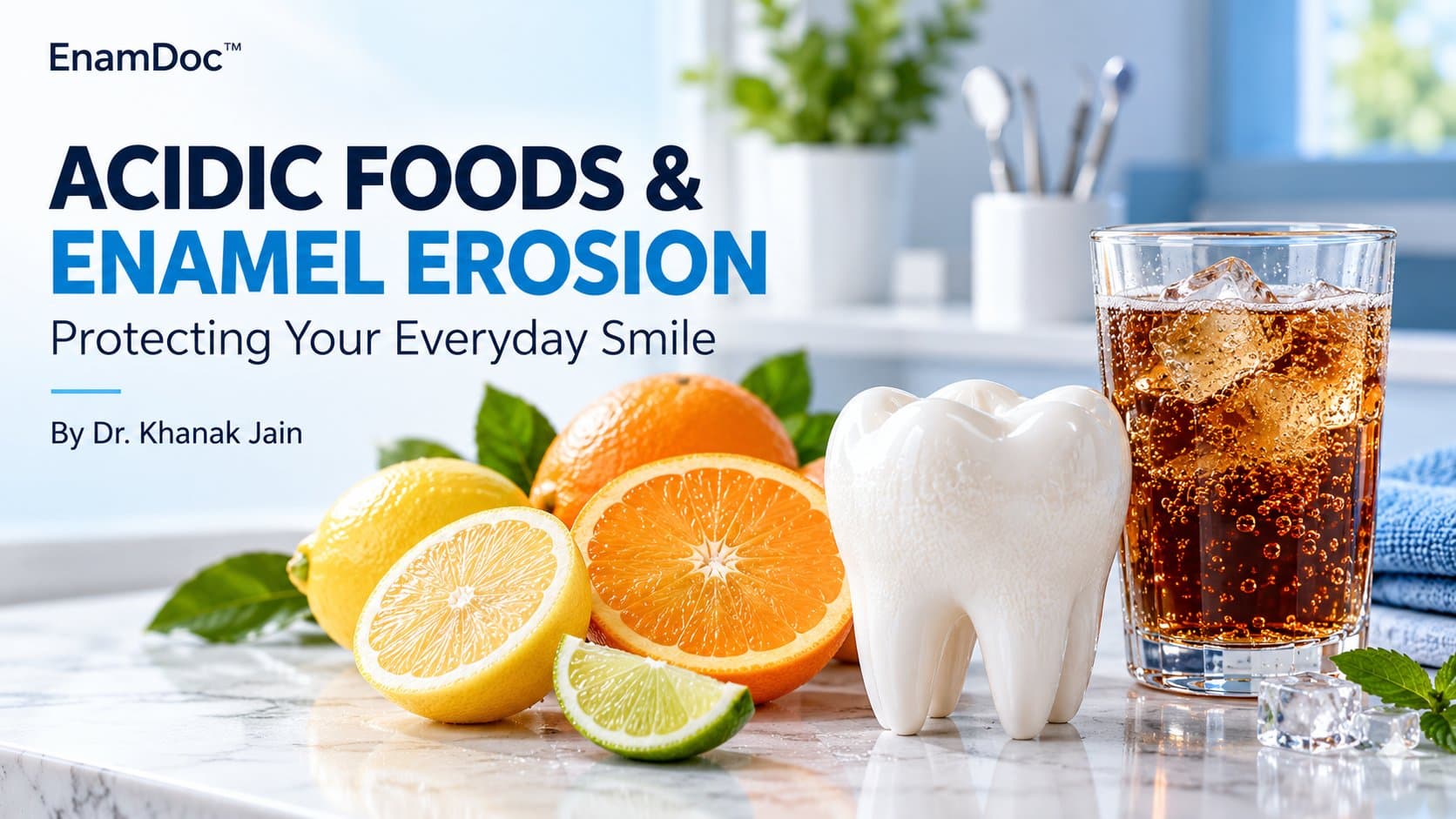
Your tooth enamel is the hardest substance in the human body. It protects the sensitive dentine and nerve tissue inside each tooth, and unlike bone, it cannot regenerate once it is gone. Yet millions of people are slowly wearing it away every day — not because of poor brushing habits, but because of what they are eating and drinking.
Acid erosion is a form of tooth wear that is entirely preventable, but it tends to be invisible until a significant amount of damage has already occurred. Understanding how it works is the first step toward protecting teeth that have to last a lifetime.
What Exactly Is Enamel Erosion?
Enamel erosion happens when acids dissolve the mineral crystals that make up the outer shell of your teeth. The enamel is composed primarily of hydroxyapatite, a calcium phosphate mineral. When the pH in your mouth drops below approximately 5.5, this mineral begins to dissolve — a process called demineralisation.
Unlike tooth decay, which is caused by bacteria producing acid as a byproduct of digesting sugar, enamel erosion from diet is a direct chemical attack. The acid in your food or drink is the culprit itself, without any bacterial involvement. This distinction matters because fluoride toothpaste and reduced sugar intake, while important for preventing cavities, do not fully protect against dietary acid erosion.
The Worst Foods and Drinks for Your Enamel
Not all foods are equally damaging. The more acidic a food or drink is, and the longer it stays in contact with the teeth, the greater the erosion risk.
Citrus Fruits and Juices
Oranges, lemons, limes, and grapefruit are among the most acidic foods you can eat. Lemon juice has a pH of around 2, which is highly corrosive to enamel. Drinking lemon water first thing in the morning — a popular wellness trend — exposes teeth to acid at a time when saliva flow is low and buffering capacity is reduced.
Carbonated Drinks
Fizzy drinks are doubly problematic. They contain carbonic acid from the carbonation process, plus citric acid or phosphoric acid as additives. Diet sodas are no safer than regular ones when it comes to enamel — the sugar content is irrelevant; the acid is what matters. Even sparkling water is mildly acidic, with a pH of around 4 to 5, though it is far less damaging than soft drinks.
Sports and Energy Drinks
These are among the most erosive drinks available. They typically contain citric acid as both a preservative and flavour enhancer, and people tend to sip them slowly over extended periods during exercise, meaning prolonged acid exposure. Studies measuring enamel loss have consistently shown these drinks to be particularly damaging.
Wine and Vinegar
Red and white wine both have a pH in the range of 3 to 4. Swirling wine in the mouth while tasting, or drinking wine with meals over an extended period, gives acid ample time to work on enamel. Apple cider vinegar, popular as a health supplement, has a pH of around 2.5 to 3 and can cause significant erosion when taken undiluted or held in the mouth.
Some Fruits and Pickled Foods
Strawberries, blueberries, and tomatoes are mildly acidic but generally less damaging because of the way most people eat them. Pickled vegetables and foods prepared with lots of vinegar carry a higher risk, especially when consumed frequently.
How to Recognise Enamel Erosion
Enamel erosion develops silently. By the time you notice the signs, a meaningful amount of tooth structure has already been lost. The most common early indicators include:
- Increased sensitivity — particularly to cold, sweet, or acidic foods and drinks, as the enamel thins and dentine becomes more exposed
- Rounded or smooth-looking teeth — the natural micro-texture of enamel is worn away, giving teeth a polished appearance that dentists recognise immediately
- Discolouration — as enamel thins, the yellower dentine beneath shows through
- Transparent or chipped edges — the biting edges of front teeth may become thin, translucent, or prone to chipping
- Cupping — small depressions on the biting surfaces of molars, where acid has dissolved the centre of the tooth
What Your Dentist Looks For
A trained dentist can detect enamel erosion at its earliest stages during a routine examination. They will look at the pattern of wear — erosion from dietary acid tends to affect all teeth rather than specific ones, and tends to spare areas protected by soft tissue. This distinguishes it from mechanical wear caused by bruxism or abrasive toothbrushing.
Dentists may use photography to document and track progression over time, and will often ask questions about your diet and lifestyle to identify the acid sources. Keeping your dental records up to date and attending regular check-ups makes this kind of monitoring possible. EnamDoc helps patients stay on top of appointments with automated reminders, so that early detection check-ups do not get postponed.
What Can Be Done Once Erosion Occurs?
Enamel cannot grow back, but progression can be stopped. Depending on the severity, treatment options range from conservative to restorative:
- Fluoride treatments — high-concentration fluoride can strengthen remaining enamel and reduce sensitivity
- Dental bonding — composite resin can be applied to eroded surfaces to restore shape and protect dentine
- Veneers or crowns — in more advanced cases, porcelain restorations may be required to rebuild tooth structure and aesthetics
The most important treatment, however, is removing the source. No restoration will last if the acid exposure continues.
Protecting Your Enamel: Practical Steps
The good news is that erosion is very preventable once you know what to avoid and how to manage acid exposure.
- Use a straw when drinking acidic beverages to direct the liquid past the teeth
- Rinse with water immediately after consuming acidic food or drink to dilute and wash away acid
- Wait 30 to 60 minutes before brushing after eating or drinking anything acidic — brushing while enamel is softened causes additional loss
- Chew sugar-free gum after meals to stimulate saliva, which is your mouth's natural acid buffer
- Drink acidic beverages quickly rather than sipping slowly over long periods
- End meals with cheese or milk — dairy raises the pH of the mouth and provides calcium that aids remineralisation
- Use a soft-bristled toothbrush and a low-abrasion fluoride toothpaste
The Role of Saliva
Saliva is one of the most underappreciated protectors of oral health. It buffers acid, washes away food and bacteria, and provides calcium and phosphate ions that help remineralise enamel between meals. People with reduced saliva flow — due to certain medications, dry mouth conditions, or simply mouth breathing — are at much greater risk of erosion.
Staying well hydrated and avoiding prolonged mouth breathing can help. Discuss any dry mouth concerns with your dentist, as there are products specifically designed to support patients with low saliva production.
When to See Your Dentist
If you notice any sensitivity to temperature or sweetness, see visible changes in the shape or colour of your teeth, or have a diet high in acidic foods or drinks, it is worth raising the topic at your next dental visit. Regular check-ups — typically every six months — allow your dentist to catch erosion before it becomes a restorative problem.
Do not wait for symptoms to become severe. Enamel is a finite resource, and the damage accumulates quietly over years.
Frequently asked
Frequently asked questions
Can tooth enamel grow back after acid erosion?
No — tooth enamel cannot regenerate once it is lost. Unlike bone or skin, enamel has no living cells to replace what is dissolved away. However, progression can be completely halted by removing the acid source and improving oral hygiene. A dentist can apply fluoride treatments to strengthen remaining enamel and use dental bonding or veneers to restore severely eroded teeth. The key is early detection and stopping the cause before too much structure is lost.
Is lemon water bad for teeth?
Yes, it can be, especially if consumed frequently or in large amounts. Lemon juice has a pH of around 2, making it highly acidic. While lemon water dilutes the acid somewhat, repeated exposure — particularly on an empty stomach in the morning — can erode enamel over time. If you drink lemon water, use a straw to reduce tooth contact, rinse with plain water immediately after, and wait at least 30 minutes before brushing. Limiting it to once daily is a reasonable precaution.
How soon should I brush after drinking something acidic?
Wait at least 30 minutes, and ideally 60 minutes. When you consume something acidic, the enamel temporarily softens due to demineralisation. Brushing in this softened state physically abrades the enamel rather than cleaning it, causing additional loss. Rinsing with water or milk immediately after eating or drinking acidic food helps neutralise the acid and speeds up the rehardening process. Then brush after the waiting period with a soft-bristled brush and fluoride toothpaste.
- enamel erosion
- acidic foods
- tooth decay
- dental health
- pH
- oral care
Keep reading