Oral Cancer: 8 Early Warning Signs Every Indian Patient Should Know
Most oral cancers are caught too late — not because they're hard to spot, but because patients don't know what to look for. Dr. Khanak Jain walks you through 8 early warning signs you should never ignore.
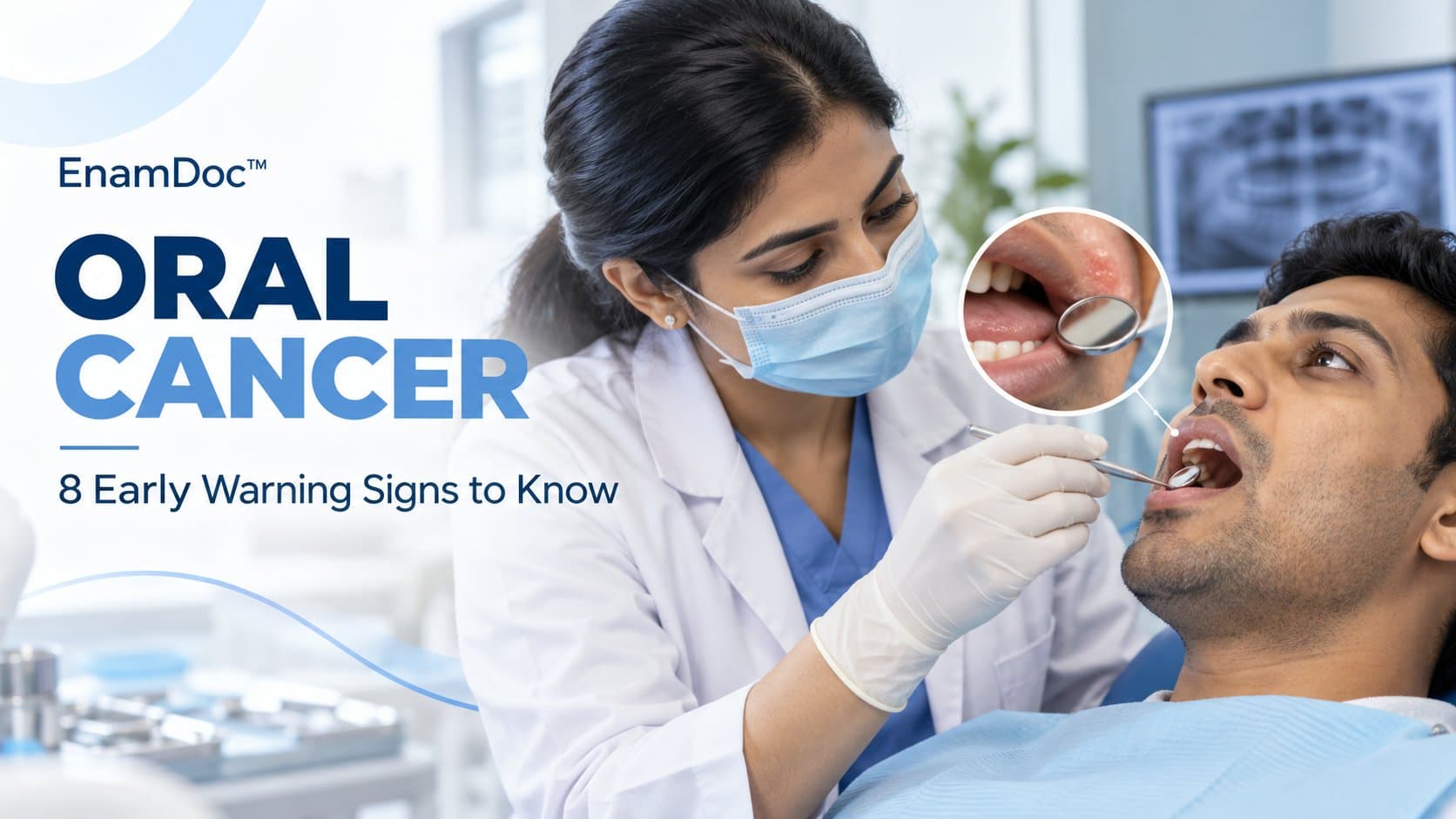
India has one of the highest rates of oral cancer in the world. Oral cancer accounts for approximately 30% of all cancers in Indian men — more than in almost any other country. Yet most cases are still diagnosed at an advanced stage, when treatment is difficult and survival rates are low.
The tragedy is that oral cancer is one of the most visible cancers in the human body. It develops in places we can see — the lips, tongue, cheeks, gums, and throat. When caught early, the five-year survival rate is well above 80%. When caught late, it drops to under 30%.
The gap between early and late detection is often just knowledge. Knowing what to look for — and acting on it — can save your life.
Who Is Most at Risk?
Oral cancer can affect anyone, but certain factors significantly raise your risk:
- Tobacco use — smoking, bidi, hookah, or chewing tobacco (gutka, khaini, pan masala)
- Alcohol consumption, especially combined with tobacco
- Betel nut (supari) chewing — a significant and underappreciated risk factor in India
- HPV (Human Papillomavirus) infection — especially HPV-16, linked to oropharyngeal cancer
- Sun exposure — a risk for lip cancer
- Poor oral hygiene and ill-fitting dentures causing chronic irritation
- Age over 40, and being male (though cases in younger people and women are rising)
If you use tobacco in any form or chew betel nut regularly, you should examine your mouth at least once a month and see a dentist for a professional screening annually.
8 Early Warning Signs of Oral Cancer
1. A Sore That Doesn't Heal
This is the most important warning sign. A mouth ulcer or sore that doesn't heal within three weeks should be evaluated by a dentist immediately. Normal canker sores resolve on their own. Persistent sores that bleed easily, have hard or raised edges, or appear without an obvious cause are never normal.
2. A Red or White Patch Inside Your Mouth
Any red patch (erythroplakia) or white patch (leukoplakia) on the lining of your cheeks, gums, tongue, or the floor of your mouth deserves attention. Leukoplakia appears as white, slightly raised patches that cannot be wiped off. Erythroplakia looks like a red, velvety spot. Both are considered precancerous conditions that can progress to cancer if not treated.
3. A Lump, Thickening, or Rough Spot
Run your tongue along the inside of your cheeks and the floor of your mouth. A new lump, thickened area, or rough, crusted patch that wasn't there before is worth investigating. These changes in tissue texture can be an early sign of abnormal cell growth.
4. Difficulty Chewing, Swallowing, or Moving Your Jaw or Tongue
If your tongue or jaw feels restricted, or if chewing and swallowing have become uncomfortable, this could indicate a growth affecting nearby tissues or muscles. People often assume it's a muscle problem — but when combined with other signs, it's a red flag that warrants an immediate check-up.
5. A Feeling of Something Stuck in Your Throat
A persistent sensation that something is caught in the back of your throat — even when there's nothing there — can sometimes be an early symptom of oropharyngeal cancer. If this feeling doesn't resolve within two weeks and isn't explained by acid reflux or another known condition, see a doctor.
6. Unexplained Numbness, Pain, or Tenderness
Pain is not always an early symptom of oral cancer, which is part of what makes early detection difficult. However, numbness or tingling in the lips, gums, or tongue without an obvious cause is worth evaluating. Unexplained facial pain that persists for more than two weeks should also be checked.
7. Loose Teeth or Poorly Fitting Dentures Without a Dental Cause
If your teeth have become loose without any apparent reason — no gum disease, no injury — it's possible that a growth is affecting the bone or tissue around the roots. Similarly, if dentures that previously fit well have suddenly started feeling uncomfortable, this could signal changes in the underlying tissue rather than normal bone changes.
8. A Persistent Lump in the Neck
Oral cancer frequently spreads to the lymph nodes in the neck. A painless, firm lump in the neck that has been present for more than three weeks should always be evaluated — even if you have no other symptoms inside your mouth. Many patients first notice a neck lump before any visible changes appear in the mouth itself.
How Is Oral Cancer Diagnosed?
If your dentist spots something suspicious, they may refer you to an oral medicine and radiology specialist, recommend a biopsy, or use a VELscope (a special light that highlights abnormal tissue) for initial screening.
A biopsy is the only definitive way to diagnose oral cancer — a small sample of the suspicious tissue is removed and examined under a microscope. It's a quick, low-risk procedure, and most results come back reassuring. If something is found, catching it at Stage 1 or 2 means treatment is far more effective and less disfiguring. Early oral cancer is often cured with surgery alone.
What to Do If You Notice Any of These Signs
Don't wait more than three weeks. Don't self-medicate with antifungal gels or pain relievers that mask the symptom without addressing the cause.
Book an appointment with your dentist. If they're concerned, ask for a referral to an oral medicine specialist. If you use tobacco or betel nut regularly, be upfront about it — it helps your doctor prioritise the right investigations quickly.
Oral cancer treated early is often cured. Oral cancer found late is one of the most devastating diagnoses a person can receive. The difference between these two outcomes is often just one appointment and knowing what to look for.
Frequently asked
Frequently asked questions
What is the most common early sign of oral cancer?
The most common early sign is a mouth ulcer or sore that doesn't heal within three weeks. Unlike ordinary canker sores that resolve on their own, a cancerous ulcer often has hard or raised edges, bleeds easily, and persists without any obvious cause. Any non-healing sore in the mouth should be evaluated by a dentist immediately.
Who is most at risk for oral cancer in India?
In India, oral cancer risk is highest among people who use tobacco in any form — smoking, bidi, hookah, or chewing tobacco like gutka and khaini — and those who chew betel nut (supari) regularly. Heavy alcohol use further increases risk, especially when combined with tobacco. People over 40, men, and those with HPV infection are also at elevated risk. That said, oral cancer can occur in people with none of these risk factors.
- oral cancer
- oral cancer symptoms
- mouth cancer India
- early detection
- dental health
Keep reading