Teeth Grinding (Bruxism): Signs, Damage & Night Guard Guide
Most people who grind their teeth at night have no idea they're doing it — until their dentist spots the evidence. Here's how to recognise bruxism, what it does over time, and what actually helps.
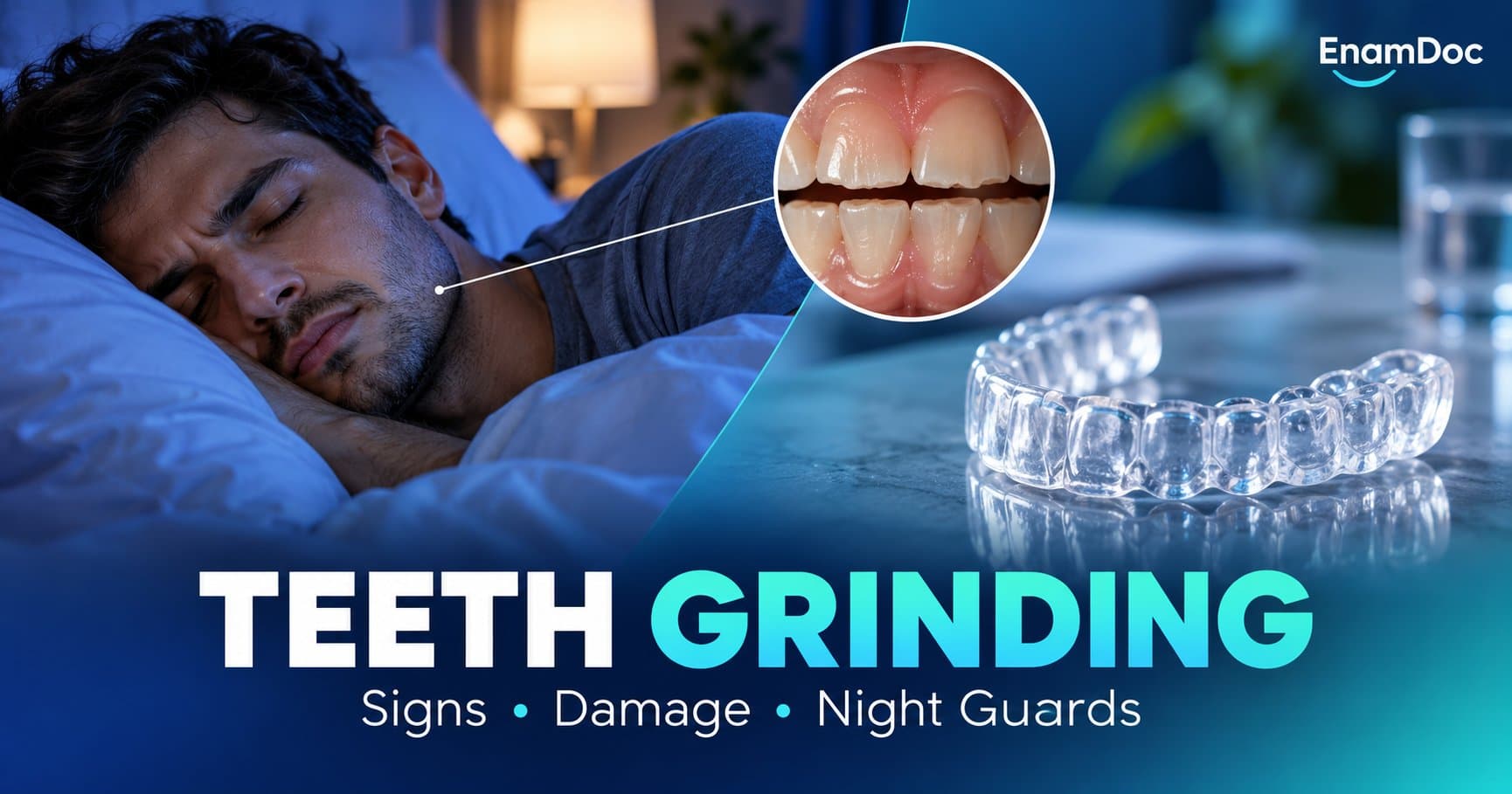
The Problem with Bruxism: You Can't Watch Yourself Sleep
Teeth grinding — or bruxism — is one of the most underdiagnosed dental problems, precisely because it happens while you're unconscious. Most people who grind their teeth are unaware of it for years. By the time they notice something is wrong, the damage is often already visible on their X-rays and in the wear patterns their dentist sees.
This isn't a rare condition. Estimates suggest that 8–10% of adults grind their teeth at some level, with many more experiencing occasional episodes without realising it constitutes a pattern.
How Do You Know If You Grind Your Teeth?
Since the grinding itself is invisible, you rely on clues — either from a sleeping partner who hears it, or from symptoms your body produces:
Morning Symptoms
- Jaw soreness or stiffness when you wake up — especially if it's worse on weekdays when you're more stressed
- Headaches that begin at the temples, typically in the morning
- Earache-like pain without any actual ear infection
- Facial muscle fatigue, like your jaw has been working overtime
What Your Dentist Sees
- Flattened, chipped, or worn-down tooth surfaces — the biting edges of front teeth become flat rather than sharp; back molars develop flat or shiny spots
- Cracked teeth, especially vertical cracks in molars
- Increased tooth sensitivity as enamel thins
- Indentations on the tongue (from clenching pressure) or cheek ridges (scalloping)
From Your Partner
If someone sleeps next to you and mentions a grinding or clicking sound at night, take it seriously. The noise from bruxism can be loud enough to wake a sleeping partner — which means the forces being exerted on your teeth are substantial.
What Causes Bruxism?
Bruxism doesn't have a single cause. The most established contributing factors are:
- Stress and anxiety — the most commonly cited trigger; many people notice grinding worsens during high-pressure periods
- Sleep disorders — bruxism is significantly more common in people with obstructive sleep apnoea
- Caffeine and alcohol — both disrupt sleep architecture and are associated with higher bruxism rates
- Certain medications — SSRIs (antidepressants) and some stimulant medications can cause or worsen bruxism as a side effect
- Bite alignment issues — misaligned teeth or a jaw that doesn't close evenly can contribute
- Genetics — bruxism does run in families
Long-Term Damage from Untreated Bruxism
The reason dentists take bruxism seriously isn't the grinding itself — it's what cumulative nightly grinding does over months and years:
- Enamel loss — enamel doesn't grow back. Once the outer layer is ground away, the softer dentine beneath is exposed, leading to sensitivity, faster decay, and further wear
- Tooth fractures — cracks in molars can propagate deeply enough to require root canal treatment or extraction
- TMJ disorders — the temporomandibular joint (jaw joint) takes enormous strain from grinding. Chronic bruxism is one of the leading causes of TMJ pain, clicking, and restricted opening
- Gum recession — the forces from grinding are transmitted to the bone and gum supporting the tooth, which can accelerate recession
- Worn-down restorations — if you have crowns, veneers, or composite fillings, bruxism will shorten their lifespan significantly
Perhaps most concerning: the damage is entirely preventable with the right intervention. Which brings us to night guards.
What a Night Guard Does — and What It Doesn't
A dental night guard (also called an occlusal splint) is a custom-fitted appliance — typically made from hard acrylic or a hard-soft combination — that sits over either the upper or lower teeth during sleep. It doesn't stop you from grinding; it creates a protective barrier so that the guard wears down instead of your teeth.
A well-made night guard also:
- Distributes the forces of grinding more evenly across the jaw
- Reduces muscle fatigue by positioning the jaw in a more neutral, relaxed posture
- Protects existing dental work (crowns, veneers) from wear
What a night guard doesn't do is address the underlying cause of the grinding. It's a protective device, not a cure. Stress management, sleep hygiene, and (for sleep-apnoea-related bruxism) appropriate CPAP or other treatment are needed to address the root cause.
Custom Guard vs. Over-the-Counter: Does It Matter?
Yes, significantly. Pharmacy night guards (the boil-and-bite type) are bulky, poorly fitted, and often make the problem worse by disrupting sleep or shifting the jaw into an uncomfortable position. A custom-fitted guard made from impressions of your teeth fits precisely, is slim enough to sleep comfortably in, and is made from durable material designed to absorb the specific pattern of your grinding.
For anyone with significant bruxism, a custom guard is the only reasonable option. They cost more — typically ₹3,000 to ₹12,000 in India depending on the clinic and material — but they last 3 to 5 years and prevent dental damage that would cost far more to repair.
Other Treatments for Bruxism
For some patients, a night guard alone isn't sufficient. Additional approaches include:
- Botox injections into the masseter muscles — reduces the force of clenching significantly for 4–6 months; increasingly popular for moderate-to-severe bruxism
- Physiotherapy — jaw exercises and massage can relieve TMJ strain
- Cognitive behavioural therapy (CBT) — evidence supports CBT for stress-related bruxism
- Biofeedback devices — wearable devices that alert you when you're clenching
If a misaligned bite is contributing to the problem, orthodontic treatment may be recommended once the acute grinding is under control.
When to See a Dentist
Don't wait until you notice tooth damage. See a dentist promptly if you experience:
- Regular morning jaw soreness or headaches
- Teeth that are becoming visibly shorter, flatter, or chipped
- Increased sensitivity to hot, cold, or pressure
- Clicking or locking in the jaw joint
- A sleeping partner has told you that you grind your teeth
Find a Dentist Who Takes Bruxism Seriously
On EnamDoc, you can find dentists and prosthodontists experienced in managing bruxism — from custom night guard fabrication to more advanced bite correction and Botox treatment. Filter by location, specialty, and patient ratings to find the right fit. Early intervention is always less expensive than repairing the damage.
Frequently asked
Frequently asked questions
Can bruxism damage be reversed?
Worn enamel cannot regenerate — once it's gone, it's gone. However, the damage can be halted and existing wear can be restored with composite bonding, porcelain crowns, or veneers. For patients who've lost significant tooth height from years of grinding, a full mouth rehabilitation may be required. The most important thing is to stop the damage from progressing with a properly fitted night guard and to address the underlying cause — stress, sleep apnoea, or medication side effects — as soon as possible.
How long does a night guard last?
A custom-made dental night guard typically lasts 3 to 5 years with proper care. If you're a heavy grinder, you may wear through one faster. Rinse it with cool water every morning and store it in its case — don't use hot water as it warps the material, and don't let pets near it (a common cause of early replacement). Bring it to your dental appointments so your dentist can check for wear and whether it still fits properly. Significant wear on the guard is actually a good sign — it means it's protecting your teeth.
Can children get bruxism?
Yes — bruxism in children is actually quite common and is usually temporary. Many children grind their teeth as their baby teeth come in or as permanent teeth erupt, and most outgrow it without treatment. In children, bruxism is often related to ear pain, teething, stress, or breathing issues during sleep. If your child's grinding is loud, they're complaining of jaw or tooth pain, or the wear seems significant, it's worth having a paediatric dentist evaluate them. Night guards are rarely recommended for young children since their jaws and teeth are still growing.
- bruxism
- teeth grinding
- night guard
- jaw pain
- TMJ
- dental guard
- patients
Keep reading