Teeth Grinding at Night: Signs You Have Bruxism and How to Stop the Damage
Waking up with a sore jaw or headaches? You may be grinding your teeth at night. Dr. Khanak Jain explains the signs of bruxism, its causes, and how a night guard can protect your smile.
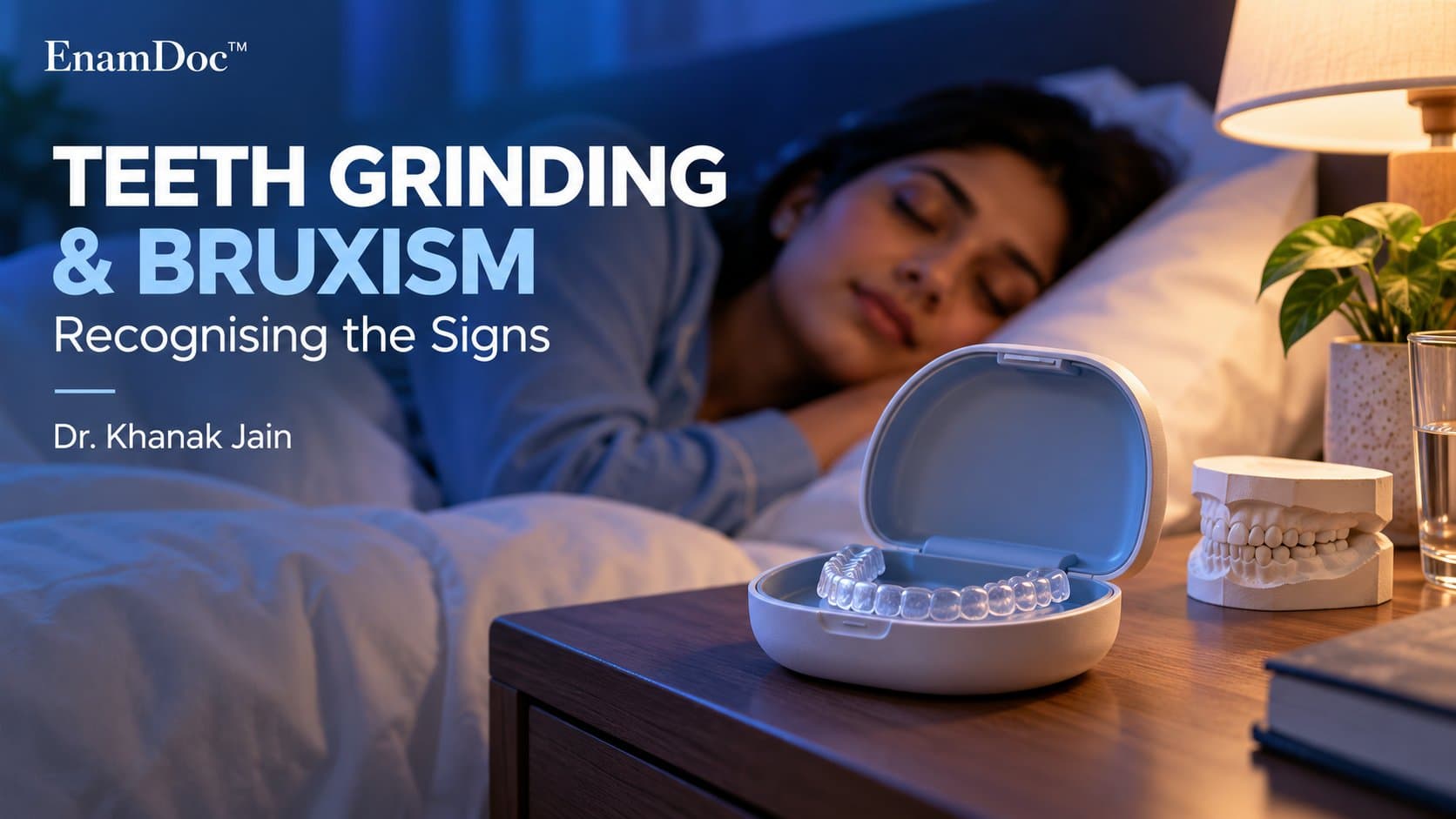
You wake up with a dull ache in your jaw. Your partner mentions they heard a grinding sound in the middle of the night. Your dentist notices unusual wear on your molars. These are classic signs of bruxism — the medical term for teeth grinding — and it affects millions of people, often without them even realising it.
The tricky thing about bruxism is that most people do it while they are asleep. By the time they notice something is wrong, the damage has already been accumulating for months or even years. The good news is that once you identify it, the condition is very manageable. This guide explains everything you need to know: the warning signs, why it happens, and how to stop it from destroying your teeth.
What Is Bruxism?
Bruxism is the involuntary clenching, grinding, or gnashing of teeth. It happens in two main forms: sleep bruxism (during the night) and awake bruxism (during the day). Sleep bruxism is classified as a sleep-related movement disorder, which means the brain's sleep-wake cycle plays a role in triggering it.
During a grinding episode, the forces on your teeth can reach up to 250 kilograms — far more than the normal chewing force of 70–80 kg. Over time, this relentless pressure wears away tooth enamel, fractures fillings, inflames the jaw joint, and causes chronic facial pain.
Signs You May Be Grinding Your Teeth at Night
Because sleep bruxism happens unconsciously, you often need to look for indirect signs:
- Morning jaw pain or stiffness — Your jaw muscles have been working hard for hours. You may notice it is difficult to open your mouth wide when you first wake up.
- Headaches, especially at the temples — The temporalis muscle wraps around the side of your head. Grinding activates it repeatedly, which commonly causes tension headaches that start near the temples.
- Tooth sensitivity — As enamel wears down, the underlying dentine becomes exposed. You may suddenly notice sharp sensitivity to cold drinks, sweet foods, or even air.
- Flattened, chipped, or cracked teeth — Your dentist may point out unusual wear patterns, especially on the biting surfaces of your back teeth.
- Ear pain without infection — The temporomandibular joint (TMJ) sits right next to the ear canal. Inflammation from grinding can feel exactly like an earache.
- Cheek biting marks — Look inside your cheeks. A rippled line of bite marks along the inner cheek is a common sign.
- Loose teeth (in severe cases) — Chronic bruxism can loosen teeth over time by stressing the periodontal ligament.
- A partner telling you — The grinding sound can be loud enough to wake a sleeping partner.
What a Dental Check-Up Reveals
Many patients are surprised when a routine check-up identifies bruxism before they experience any symptoms. Your dentist will look for: flattened cusps, enamel loss on the biting surfaces, micro-fractures visible under magnification, scalloped edges on the tongue (indicating clenching), and gum recession near heavily stressed teeth. If you have any of these signs, mention whether you notice jaw tightness in the morning — that context helps your dentist put the picture together.
Why Does Bruxism Happen?
There is rarely one single cause. Research points to a combination of factors:
- Stress and anxiety — This is the most commonly identified trigger. When we are under psychological pressure, the body expresses it physically — and for many people, that means clenching the jaw. Students before exams, professionals with high-pressure jobs, and anyone going through a stressful life event are at higher risk.
- Sleep disorders — Bruxism is significantly more common in people who have obstructive sleep apnoea. The brain may trigger clenching as part of a micro-arousal to reopen the airway.
- Certain medications — SSRIs (a class of antidepressants), stimulants used for ADHD, and some antipsychotic medications are linked to bruxism as a side effect.
- Caffeine and alcohol — Both disrupt sleep architecture and can worsen grinding. High caffeine intake and alcohol in the evening are associated with more frequent bruxism episodes.
- Genetic factors — Bruxism runs in families. If a parent grinds their teeth, you are more likely to as well.
- Bite problems — A misaligned bite (malocclusion) can occasionally contribute, though the research here is less clear-cut than many people believe.
What Damage Does Bruxism Cause Over Time?
Left untreated, bruxism is one of the more destructive dental habits. Here is what years of grinding can lead to:
- Severe enamel loss — Enamel does not regenerate. Once it is gone, it is gone. Worn-down teeth become increasingly sensitive and vulnerable to decay.
- TMJ disorder (TMD) — Chronic pressure on the jaw joint can cause clicking, popping, pain, or locking of the jaw — a condition known as temporomandibular disorder.
- Broken fillings and crowns — The forces from grinding commonly fracture dental restorations, requiring repeated expensive repairs.
- Tooth fracture — In severe cases, a molar can crack vertically — the kind of fracture that often cannot be saved and requires extraction.
- Gum recession — The trauma of clenching can pull gum tissue away from the tooth, leading to root exposure and increased decay risk.
How to Stop the Damage: Treatment Options
1. Night Guard (Occlusal Splint)
A custom-fitted night guard is the single most effective treatment for protecting your teeth from bruxism damage. Made from hard or soft acrylic, it fits over your upper or lower teeth and absorbs the grinding forces so your teeth do not take the impact.
Over-the-counter guards from a pharmacy offer some protection, but a custom guard from your dentist fits better, is more comfortable to sleep in, and lasts far longer. For most patients with significant bruxism, a custom guard is a worthwhile investment.
2. Stress Management
If stress is your primary trigger, addressing the root cause matters just as much as protecting your teeth. Techniques with good evidence include cognitive-behavioural therapy (CBT), progressive muscle relaxation, mindfulness meditation, and regular aerobic exercise. Even a daily 20-minute walk has been shown to significantly reduce muscle tension and improve sleep quality.
3. Biofeedback
Biofeedback devices monitor jaw muscle activity and provide an alert — a sound or vibration — when clenching begins. This trains the brain over time to interrupt the pattern. Research shows biofeedback can reduce bruxism frequency, particularly for awake bruxism.
4. Addressing Sleep Apnoea
If you have symptoms of sleep apnoea (loud snoring, gasping during sleep, daytime fatigue), getting a sleep study done is important. Treating the apnoea — often with a CPAP machine or an oral appliance — can dramatically reduce bruxism in people where the two conditions overlap.
5. Medication Review
If you recently started a new medication and then developed bruxism, speak with your prescribing doctor. Switching to a different medication in the same class, or adjusting the dose, sometimes resolves the issue without stopping treatment.
6. Botulinum Toxin (Botox) Injections
For severe, treatment-resistant bruxism, small injections of botulinum toxin into the masseter muscle (the large chewing muscle in your cheek) can reduce the force of grinding significantly. The effect lasts 3–6 months and needs to be repeated. This is typically reserved for cases where other approaches have not worked adequately.
When to See Your Dentist
Book an appointment if you notice any combination of: regular morning jaw pain, flattened or chipped teeth, unexplained tooth sensitivity, persistent headaches, or a partner reporting grinding sounds. Your dentist can assess the degree of wear, fit you for a night guard, and refer you for further investigation if sleep apnoea or a significant TMJ problem is suspected.
At clinics that use EnamDoc, your dental records make it easy to track enamel changes over time with side-by-side comparisons of clinical notes and photographs — so that gradual wear is caught early, before it becomes a major restoration problem.
The Bottom Line
Teeth grinding at night is more common than most people realise, and the damage it causes is cumulative and largely silent until something breaks. The good news is that diagnosis is straightforward and protection — in the form of a well-fitted night guard — is highly effective. If you suspect you have bruxism, do not wait for a tooth to fracture before acting. A single appointment could save you from years of expensive dental repair.
Frequently asked
Frequently asked questions
Can teeth grinding at night damage my teeth permanently?
Yes. Tooth enamel does not regenerate, so grinding damage is permanent. Untreated bruxism can cause irreversible enamel loss, cracked teeth, TMJ problems, and worn-down fillings. Protecting your teeth with a custom night guard stops the damage from progressing, but cannot reverse what has already occurred — which is why early intervention matters.
Is a night guard from the pharmacy good enough for bruxism?
Over-the-counter night guards provide some protection, but they are generally too soft and bulky to wear comfortably all night. A custom-fitted guard made by your dentist fits precisely, is more durable, and distributes grinding forces more effectively. For moderate to severe bruxism, a custom guard is the better investment — it typically lasts 3–5 years compared to months for a generic one.
- teeth grinding
- bruxism
- night guard
- jaw pain
- TMJ
Keep reading