Teeth Grinding at Night: How to Know If You're Doing It and What Dentists Actually Recommend
Most people who grind their teeth at night don't realise they're doing it. Here's what dentists look for, what the damage looks like over time, and what they actually recommend for treatment.
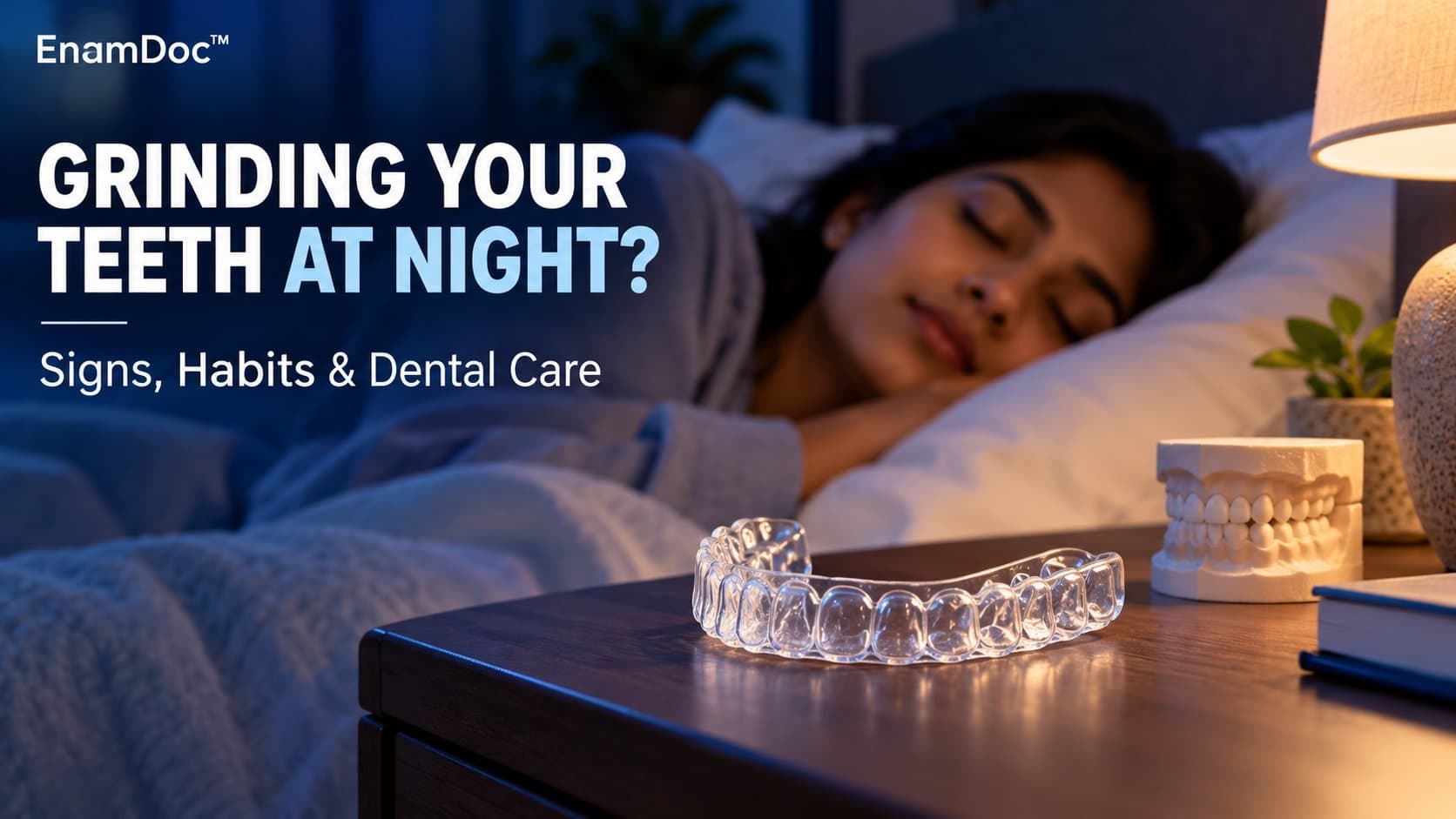
You wake up with a sore jaw, a dull headache behind your temples, and teeth that feel oddly tender. Your partner says they heard a strange sound last night. You might be grinding your teeth — and chances are, you had no idea.
Bruxism (the clinical term for teeth grinding or clenching) affects an estimated 8–10% of adults, but most don't find out until a dentist points to the damage or a sleep partner mentions the noise. This guide explains how to recognise it, why it happens, and what actually works to stop it.
What Is Bruxism?
Bruxism is the involuntary grinding, gnashing, or clenching of teeth. It most often happens during sleep (sleep bruxism), but some people also clench their jaw while awake without realising — usually during concentration or stress.
Sleep bruxism is classified as a sleep-related movement disorder, which is why it often appears alongside other sleep issues like snoring and sleep apnoea.
How Do You Know If You Grind Your Teeth?
Because it happens while you sleep, most people need external clues. Here's what to look for:
- Morning jaw soreness or tightness — especially around the masseter muscles at the sides of the face
- Headaches at the temples — often present first thing in the morning
- Tooth sensitivity — particularly to cold, which can signal enamel wear
- Flattened, chipped, or cracked teeth — your dentist will notice this before you do
- Worn-down enamel — teeth look shorter, flatter, or more transparent at the edges
- Indentations on the tongue — from clenching (your tongue presses against the teeth)
- Your partner hears it — the sound of grinding can be audible from across a room
If you notice several of these, mention them at your next dental appointment. A dentist can assess the wear pattern on your teeth and confirm whether bruxism is likely.
What Causes Teeth Grinding?
There's rarely a single cause — bruxism is usually the result of several overlapping factors:
Stress and Anxiety
This is the most commonly cited trigger. People under significant psychological stress — work pressure, financial worries, relationship difficulties — are significantly more likely to grind their teeth. Bruxism is sometimes described as the body's way of processing tension it can't release during the day.
Sleep Apnoea
There's a well-established link between sleep bruxism and obstructive sleep apnoea (OSA). When the airway is partially blocked during sleep, the brain may trigger jaw movements to reopen it. If you grind your teeth and also snore or feel unrefreshed after sleep, it's worth asking your doctor about a sleep study.
Certain Medications
SSRIs (antidepressants like sertraline, fluoxetine, and escitalopram) are associated with bruxism as a side effect in some people. Stimulants and recreational substances can also increase grinding. If you recently started a new medication and noticed jaw symptoms, speak to your prescribing doctor.
Genetics
Bruxism tends to run in families. If one of your parents ground their teeth, your risk is higher. Researchers are still studying exactly which genetic factors are involved, but the family link is consistent.
What Damage Does Untreated Bruxism Cause?
Teeth grinding isn't just an inconvenience — years of untreated bruxism can cause serious structural damage:
- Enamel erosion — enamel doesn't regenerate, so once it's gone, it's gone
- Cracks and fractures — teeth become structurally weaker and more likely to break
- Tooth sensitivity that doesn't resolve — exposed dentine is permanently sensitive
- TMJ disorder — chronic overuse of the jaw joint can lead to clicking, pain, and limited opening
- Receding gums — the mechanical force accelerates gum detachment from teeth
- Restorations failing early — crowns and fillings wear down or break faster than normal
What Dentists Actually Recommend
There's no single cure for bruxism. Treatment is about managing the behaviour and protecting the teeth while you work on the underlying cause.
A Custom Night Guard
This is the most widely recommended first step. A dental night guard is a hard or soft acrylic device worn over the upper or lower teeth during sleep. It doesn't stop the grinding — your jaw still moves — but it protects the teeth and distributes the force more evenly.
Dentist-made night guards are significantly more effective than over-the-counter versions, which are often too soft and can sometimes worsen clenching. Ask your dentist to take impressions for a custom-fit guard rather than picking one up from a pharmacy.
Stress Management
If stress is the primary driver, addressing it directly — through therapy, exercise, better sleep hygiene — often reduces grinding more than any dental device alone. Cognitive behavioural therapy (CBT) has shown particular promise for stress-related bruxism.
Treating Underlying Sleep Apnoea
If sleep apnoea is contributing, treating it — typically with a CPAP machine or a mandibular advancement device — often reduces bruxism significantly. This connection is under-recognised but worth exploring if other treatments haven't helped.
Botulinum Toxin (Botox) Injections
In severe cases, injections into the masseter muscles temporarily reduce their strength, making it physically harder to grind with force. This isn't a first-line treatment but is an established option for people who haven't responded to other approaches.
What Doesn't Work
- Bite adjustment (occlusal equilibration) — grinding teeth down to "balance" the bite was once recommended but lacks strong evidence and is irreversible
- Soft pharmacy night guards — may feel comfortable initially but often worsen clenching over time
- Jaw stretching exercises alone — can relieve soreness temporarily but don't address the underlying pattern
Track Your Symptoms Over Time
One reason bruxism is often caught late is that patients don't see the same dentist consistently — or forget to mention symptoms at each visit. When you use EnamDoc to book dental appointments and maintain digital records, your dentist has a clearer picture of how your teeth have changed. Wear patterns that develop gradually are easier to spot when there's a documented baseline to compare against.
The Bottom Line
Most people who grind their teeth don't know they're doing it — and by the time they find out, some damage has already been done. The good news is that a custom night guard, stress management, and treating any underlying sleep disorder can significantly reduce both the grinding and its consequences.
If you notice the signs — morning jaw soreness, headaches, flattening teeth, or a partner's complaint — mention it at your next dental visit. The earlier it's identified, the simpler it is to manage.
Frequently asked
Frequently asked questions
How do I know if I grind my teeth at night?
The most common signs are waking up with jaw soreness or tightness, headaches at the temples, and teeth that feel sensitive or tender. A partner may hear the grinding sound during the night. Your dentist can also spot wear patterns on your enamel — flattened or chipped edges are a telltale sign. If you suspect bruxism, mention it at your next dental appointment so your dentist can examine your teeth for evidence of grinding.
Does a night guard actually stop teeth grinding?
A night guard doesn't stop the grinding itself — your jaw still moves while you sleep. What it does is create a barrier between your upper and lower teeth so they're not grinding against each other directly. This protects the enamel and reduces the pressure transmitted to the jaw joint. A custom-made guard from your dentist is far more effective than over-the-counter versions, which are often too soft and can actually worsen clenching in some people.
Can stress cause teeth grinding?
Yes — stress and anxiety are the most commonly cited triggers for bruxism, particularly sleep bruxism. The body may discharge tension through jaw movement during sleep, especially when that tension hasn't been resolved during the day. This is why bruxism often worsens during stressful life periods — exams, work pressure, relationship difficulties. Addressing stress through therapy, exercise, or better sleep habits can reduce grinding, sometimes more effectively than a night guard alone.
- bruxism
- teeth grinding
- night guard
- jaw pain
- tmj
- sleep
Keep reading