Mouthguards for Sports vs. Nightguards for Grinding: Why You Can’t Swap Them
Think an athletic mouthguard can double as a nightguard? Discover the critical differences in materials, fit, and biomechanics—and why swapping them risks your oral health.
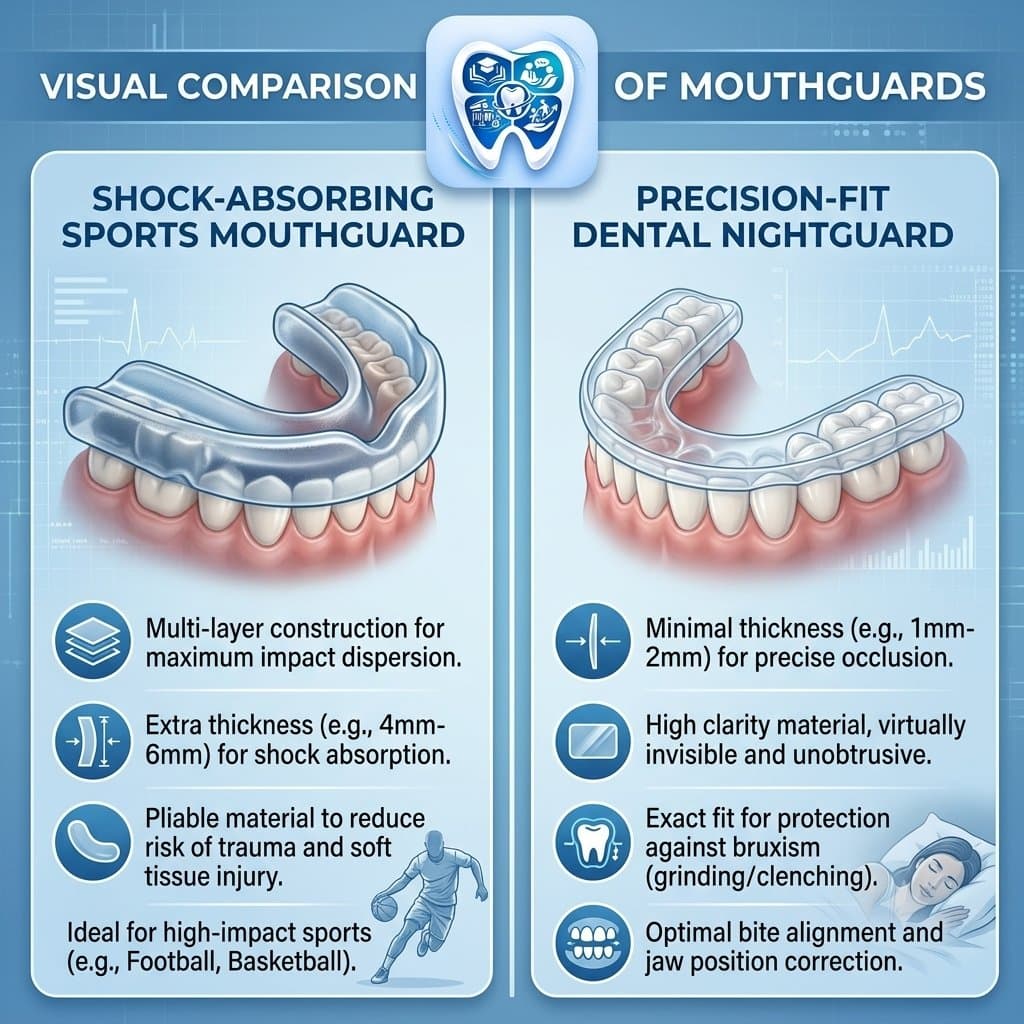
At first glance, sports mouthguards and dental nightguards look quite similar: both are horseshoe-shaped oral appliances designed to protect your teeth from damage. Because custom dental appliances require an investment, patients frequently ask: "Can I just wear my sports mouthguard while sleeping to stop teeth grinding?" or "Can I use my nightguard during football practice?"
The short answer is a definitive no. While both appliances offer protection, they are engineered to withstand completely different mechanical forces. Swapping them not only fails to protect your smile, but it can also lead to irreversible bite shifts, jaw pain, and severe oral trauma.
1. The Primary Objectives: Impact Absorption vs. Wear Resistance
The core distinction lies in the specific type of trauma each guard is designed to counter:
- Sports Mouthguards (Sudden, High-Velocity External Impact): Designed to absorb, dissipate, and redistribute blunt external forces from balls, elbows, or falls. They cushion the blow to prevent fractured crowns, knocked-out (avulsed) teeth, root fractures, and lacerations to the lips, cheeks, and tongue.
- Nightguards (Chronic, Low-Velocity Static Pressure): Built to neutralize the internal forces of bruxism (clenching and grinding). During sleep, jaw muscles can generate continuous bite forces exceeding 250+ pounds per square inch. A nightguard acts as a durable, slick barrier to prevent enamel attrition, tooth cracking, and temporomandibular joint (TMJ) strain.
2. Material Composition and Thickness
The clinical materials used in fabrication reflect these opposing functions:
- Sports Mouthguards (Thick & Shock-Absorbent): Typically crafted from bulky, pliable ethylene-vinyl acetate (EVA) or laminated polymers. They are intentionally thick (usually 3 mm to 5 mm) to provide adequate shock absorption during direct physical contact.
- Nightguards (Dense, Rigid & Low-Profile): Made from hard, laboratory-grade acrylic, copolyester, or dual-laminate materials (a soft inner layer against teeth paired with a hard outer shell). They are significantly thinner (1 mm to 3 mm) and engineered with a hard, smooth occlusal surface that allows the opposing teeth to glide freely rather than catch.
3. Fit and Occlusal Biomechanics
| Feature | Sports Mouthguard | Dental Nightguard |
|---|---|---|
| Primary Hazard | External collisions, flying gear, physical sports impact | Involuntary nocturnal clenching and friction (Bruxism) |
| Material Texture | Soft, rubbery, high-cushion polymer (EVA) | Hard, polished acrylic or dual-laminate resin |
| Bite Design | Soft surface; opposing teeth sink in to secure jaw alignment | Flat, smooth occlusal table to allow smooth jaw gliding |
| Airway & Comfort | Bulky; designed for short daytime sessions, not sleep | Low profile; engineered for safe, comfortable 8-hour sleep |
What Happens If You Swap Them?
Wearing a Sports Mouthguard to Bed:
- Aggravated Muscle Clenching: The soft, chewy texture of an athletic mouthguard stimulates a natural chewing reflex during sleep. Your jaw muscles continuously bite into the rubbery surface, worsening morning headaches and TMJ fatigue.
- Unintended Tooth Movement: Bulky athletic guards are not adjusted to balance your natural dental occlusion. Uneven pressure across the arch can cause orthodontic shifting and bite misalignment over time.
- Bacterial Build-Up & Airway Obstruction: Sports guards cover large portions of gingival tissue and are bulky, which can obstruct normal breathing pathways during deep sleep and trap bacteria against the gums overnight.
Wearing a Nightguard During Sports:
- Inadequate Shock Dissipation: Rigid acrylic nightguards do not absorb or cushion blunt kinetic impacts. A hard elbow or ball strike can shatter the hard resin, causing lacerations to the gums and leaving underlying teeth vulnerable to severe fractures.
- No Soft-Tissue Shielding: Nightguards are precisely trimmed along the tooth margins and do not cover or cushion the surrounding labial tissue, offering zero protection against lip cuts.
The Bottom Line: Use the Right Tool for the Job
When it comes to dental protection, specialization matters. Use a heavy-duty, shock-absorbing mouthguard during athletic competition to deflect impact trauma, and rely on a custom-fitted, hard acrylic nightguard during sleep to safeguard your enamel and jaw joints from bruxism wear.
Frequently asked
Frequently asked questions
Why does wearing a soft sports guard at night make jaw pain worse?
Soft, rubbery materials stimulate the brain's chewing reflex during sleep. Instead of relaxing, jaw muscles instinctively clench and grind down harder into the pliable material, intensifying TMJ soreness, tension headaches, and facial fatigue.
Can an over-the-counter "boil-and-bite" guard replace a custom dental nightguard?
Over-the-counter guards are generally made of soft, spongy plastics that wear out quickly and often cause bite shifts. A custom-fabricated nightguard from your dentist uses rigid, balanced acrylic designed to protect both enamel and jaw alignment safely.
- mouthguards
- nightguards
- bruxism
- sports dentistry
- teeth grinding
- dental trauma
- TMJ
- oral protection
Keep reading