Exam prepFor students
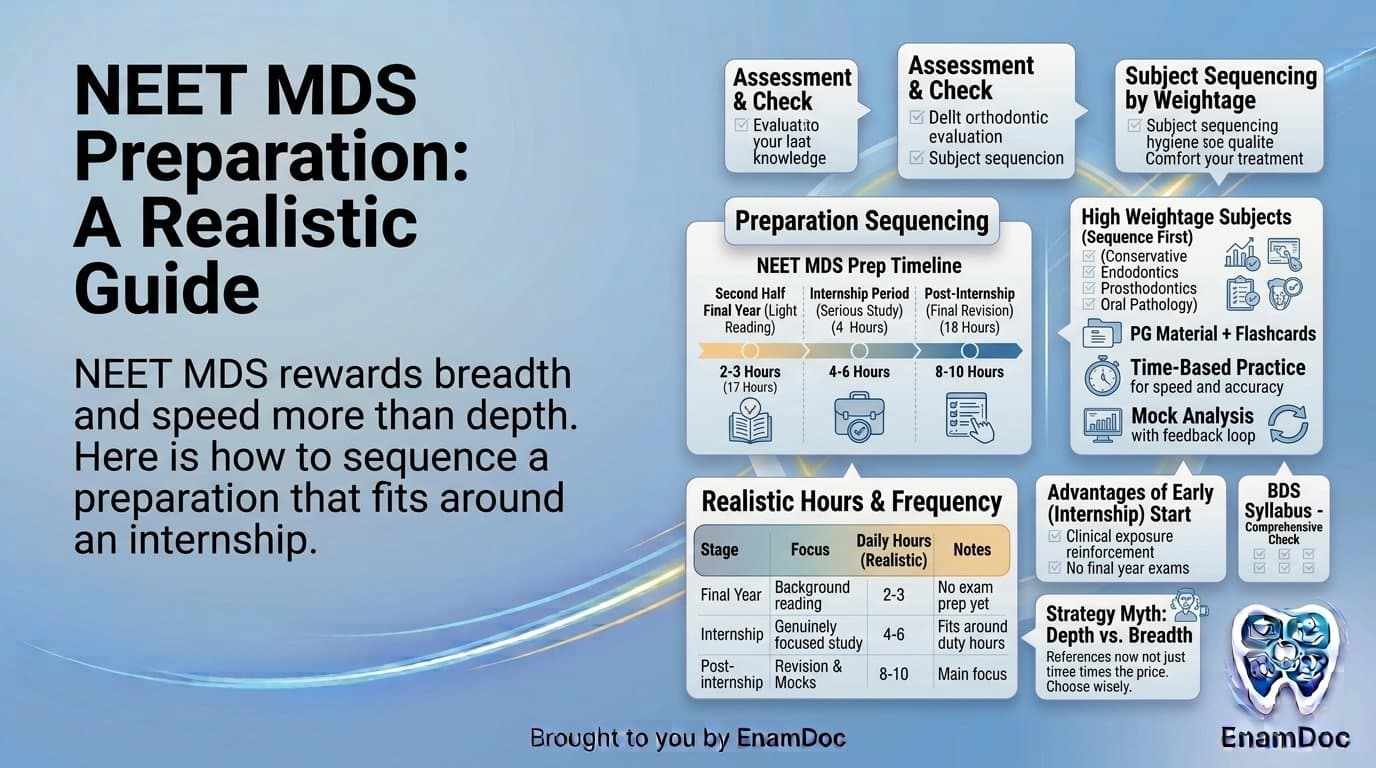
NEET MDS Preparation: A Realistic Guide
NEET MDS rewards breadth and speed more than depth. Here is how to sequence a preparation that fits around an internship.
3 min read
For students
BDS is five years of theory followed by a career nobody quite prepares you for. These guides cover the parts the syllabus does not: how to get something out of clinical postings, how a viva is actually marked, how to present a case, and what the realistic options are after graduation.
Most of it is written from what practising dentists say they wish they had known, rather than from what an exam wants to hear.
55 guides
NEET MDS rewards breadth and speed more than depth. Here is how to sequence a preparation that fits around an internship.
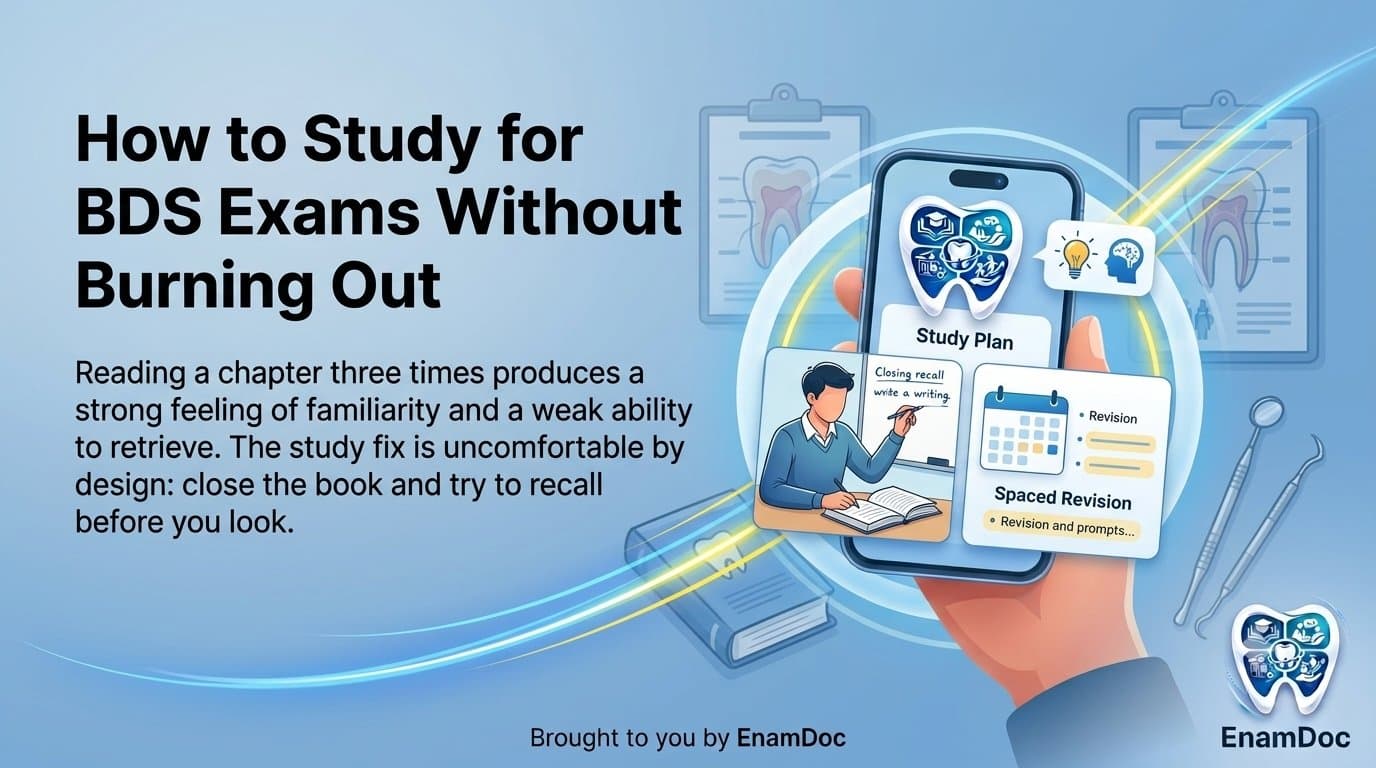
Reading a chapter three times feels productive and barely works. Here is the study system that actually holds up across a BDS year.
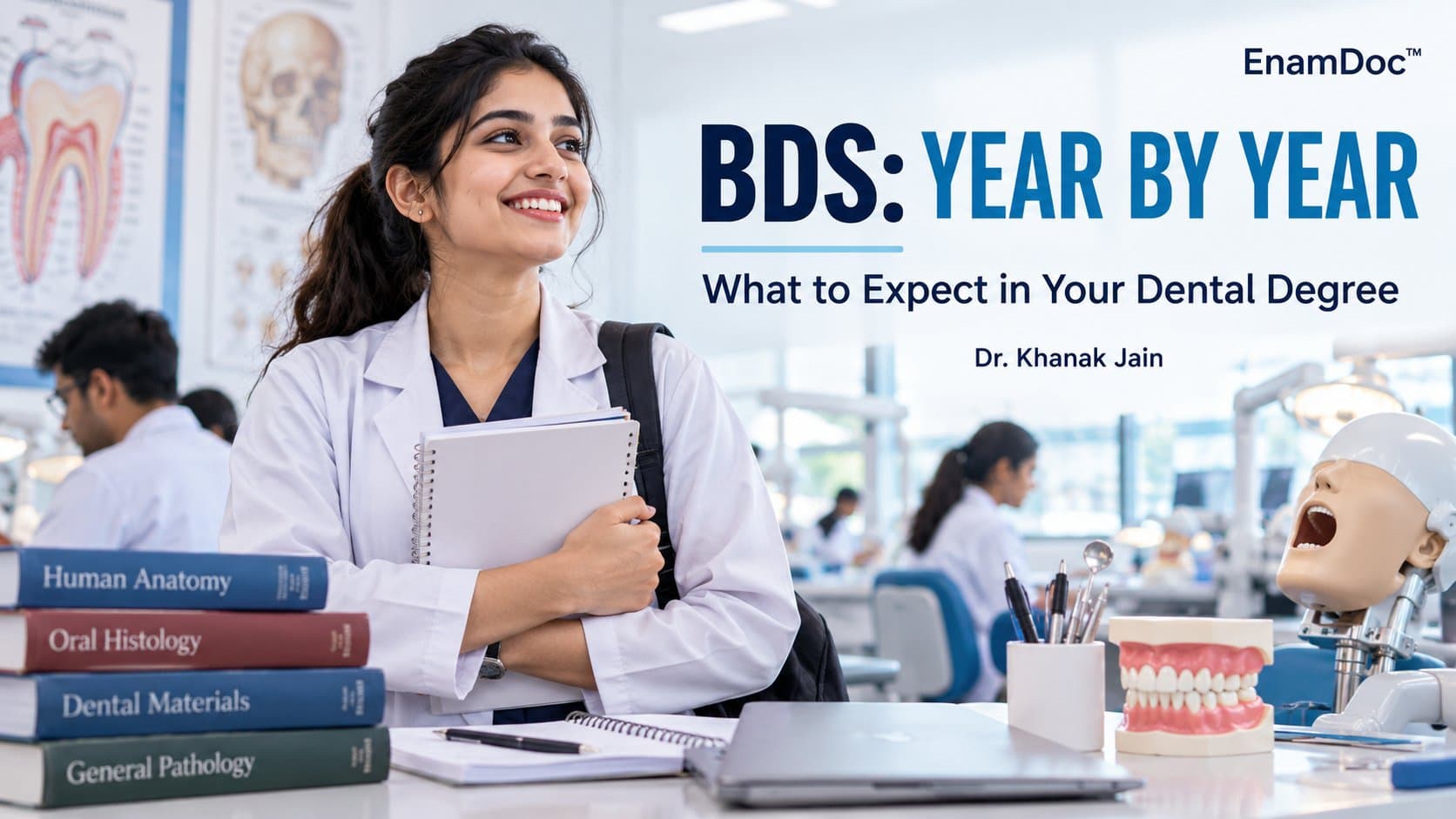
Every year of a BDS degree has a distinct character — from the culture shock of first-year anatomy to the clinical independence of your internship year. Dr. Khanak Jain maps out what changes each year, so you can prepare mentally and academically before it arrives.
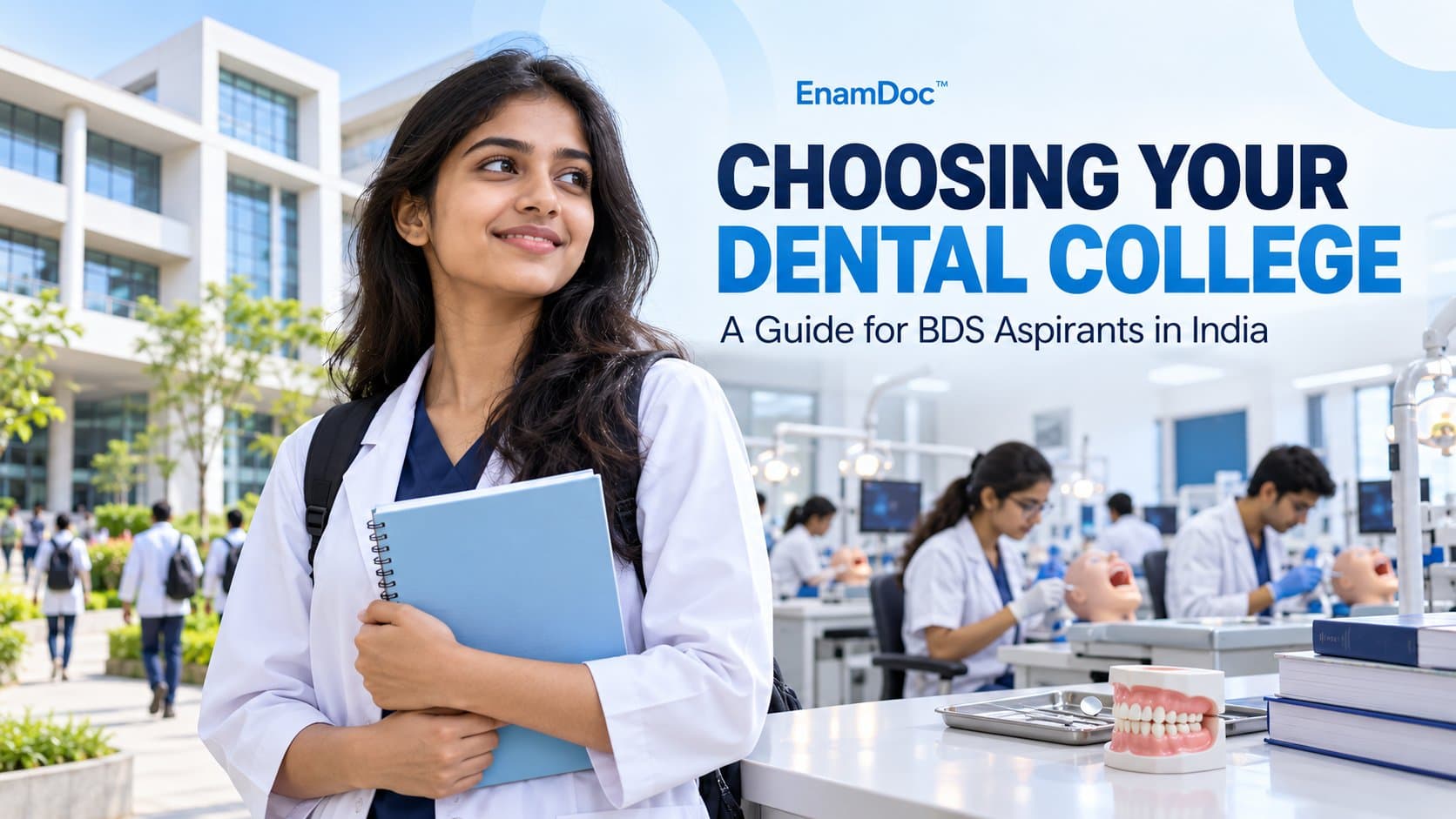
With over 300 dental colleges in India and huge variation in infrastructure, faculty, and clinical exposure, choosing wisely can define your entire career. Dr. Khanak Jain breaks down what actually matters — and what to ignore.

Choosing your MDS is one of the most important decisions of your dental career. Dr. Khanak Jain gives an honest breakdown of all 9 specialisations — what each involves, who it suits, and the career reality.
Starting your BDS internship can be overwhelming — real patients, real procedures, and nobody telling you exactly what to expect. Dr. Khanak Jain shares the practical truths every dental intern needs to hear.
Your first clinical posting is a shock after years of theory. Dr. Aditya Swami shares what to expect, how to handle patient nerves, how to communicate clearly, and how to make the most of every chair-side opportunity.
BDS final year viva exams feel overwhelming — but they follow a pattern. Dr. Khanak Jain breaks down subject-wise tips for Orthodontics, Oral Surgery, Prosthodontics, and more.
Clinical photography is a core skill for dental students — essential for case documentation, academic presentations, and clinical audit. This guide covers camera settings, patient positioning, retractors, mirrors, and common mistakes to avoid.
Dental pharmacology covers a lot of ground — from local anaesthetics to antibiotics to emergency drugs. This topic-wise strategy helps BDS students focus their revision, understand high-yield areas, and avoid wasting time on low-priority content.
Complete dental OSCE guide for BDS students: station types, marking schemes, common mistakes, and revision strategies to pass your clinical exam.

A poorly structured case history loses marks even if your clinical findings are accurate. Here's how to write one that's thorough, logical, and impresses examiners — with the sections and phrasing they're actually looking for.

Not every dentist belongs in a clinic — and that's perfectly fine. From dental public health and research to the dental industry, academia, and health technology, there is a growing range of rewarding non-clinical careers available to BDS graduates in India.
A practical guide for BDS interns in India — what rotations look like, how to build skills fast, common mistakes to avoid, and how to stand out in your first year of clinical practice.
Your first clinical posting in dental college is equal parts exciting and nerve-wracking. Here is an honest guide to what actually happens, what you will be asked to do, and how to make the most of your early clinical years.
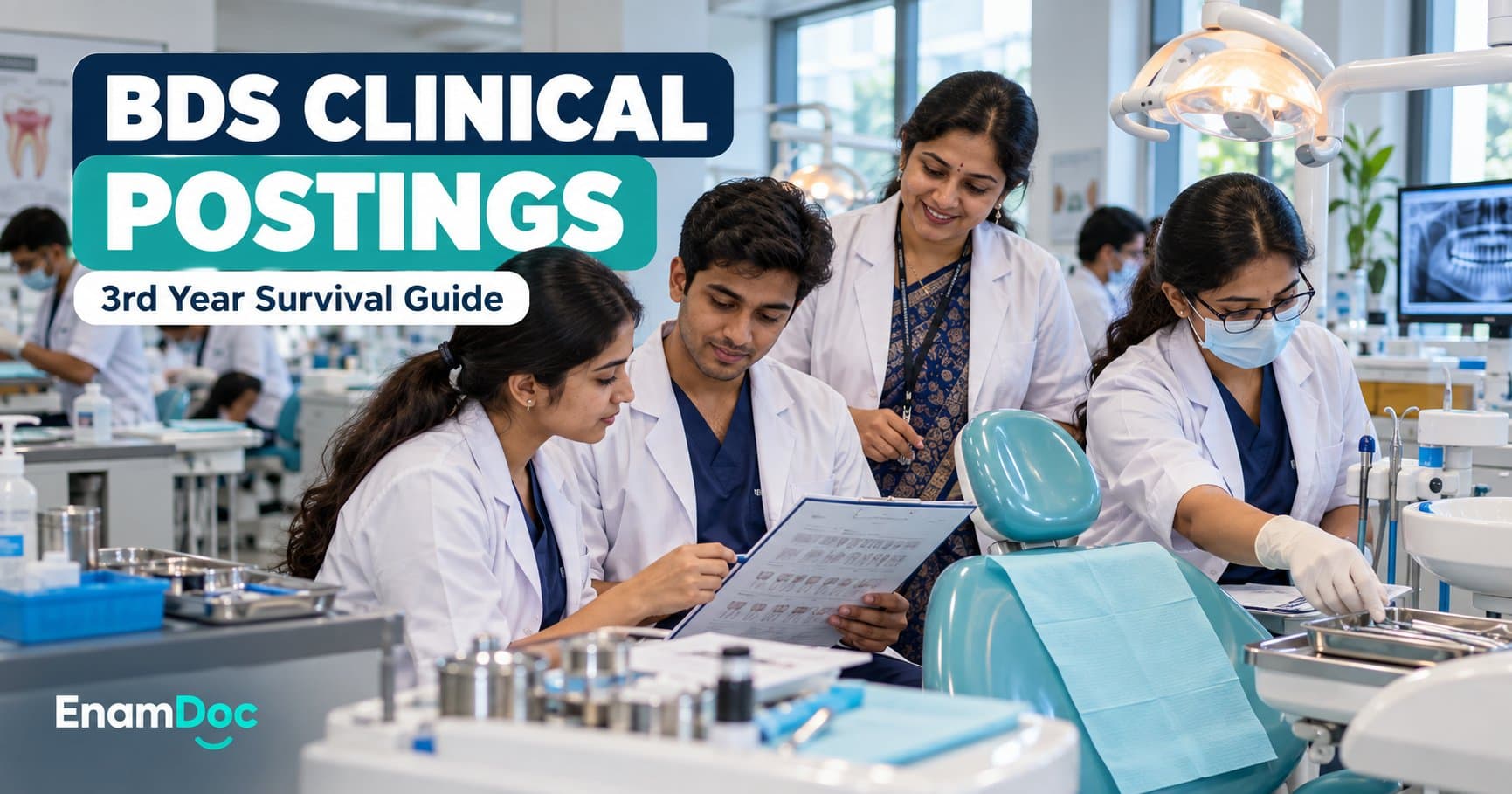
Everything nobody tells you when you first walk into the clinic — from managing patients and navigating departmental dynamics to actually completing your cases.

Most fresh BDS graduate resumes look identical, which is exactly why they get skipped. Here's what actually makes a clinic owner or HR reviewer stop scrolling and call you in.
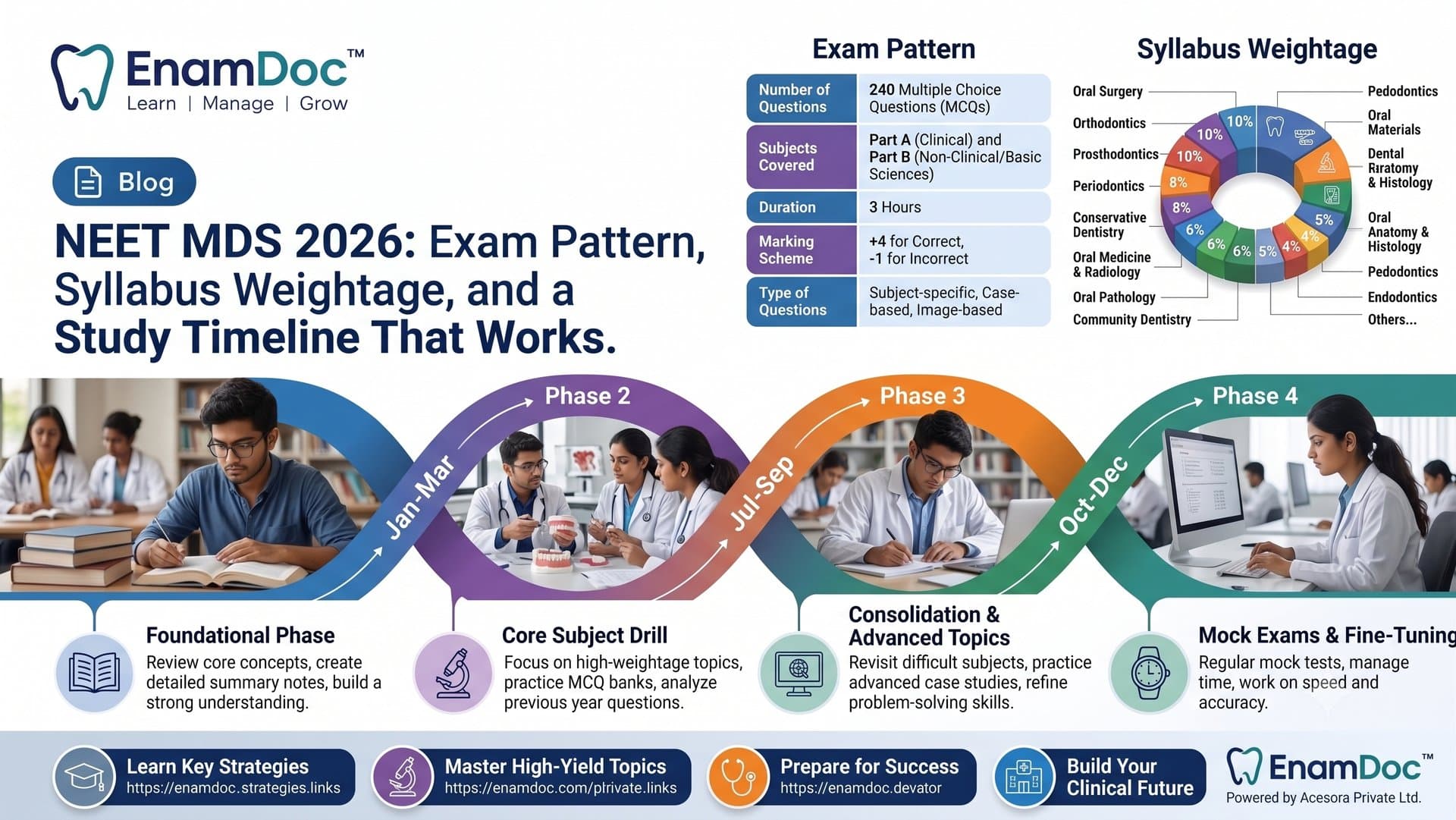
NEET MDS rewards efficient prioritization more than raw hours. Here's the actual exam pattern, which subjects carry the most weightage, and a realistic study timeline for BDS graduates preparing this cycle.
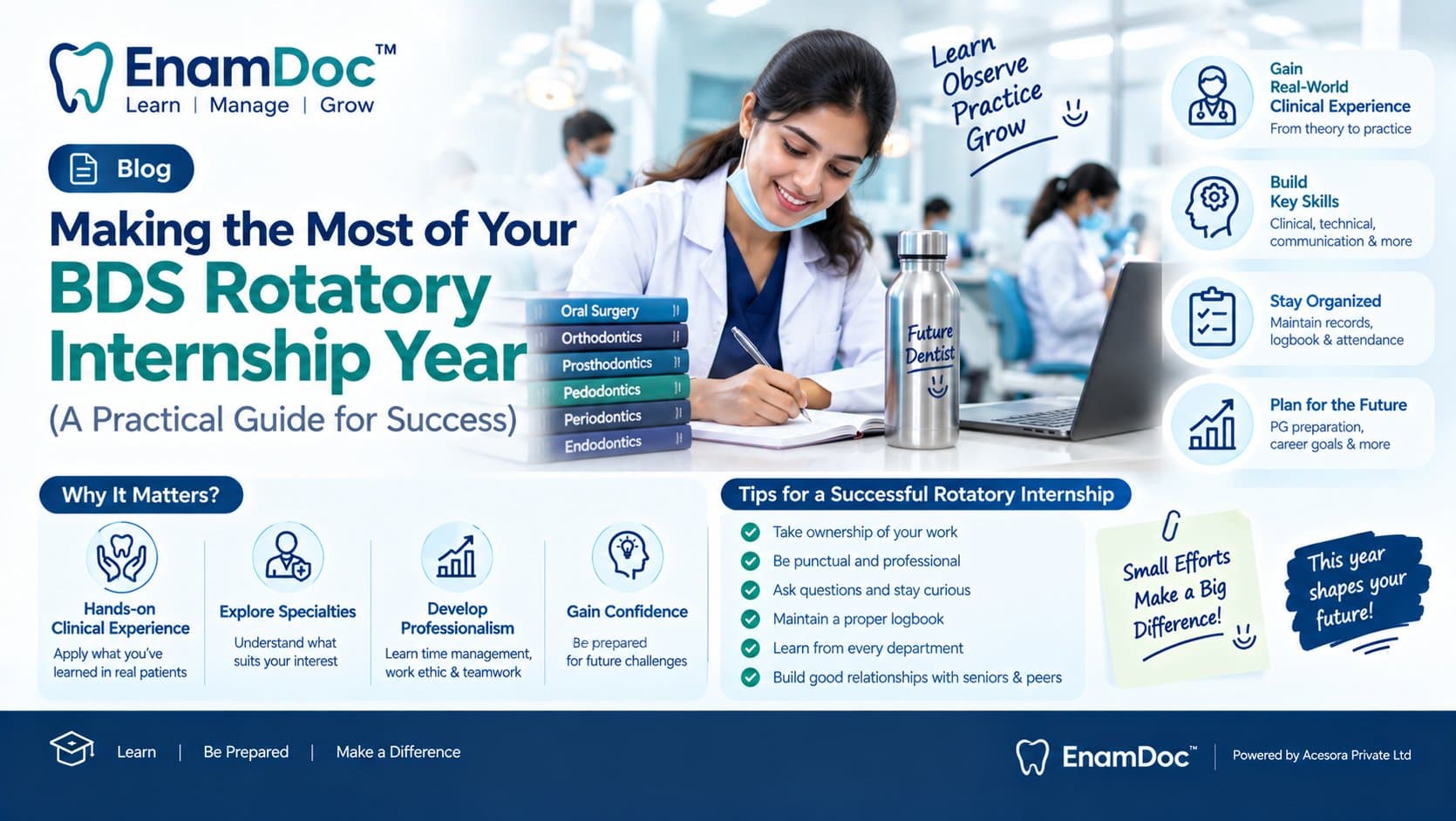
The internship year is the only time in a dental career with structured rotation across every specialty at once. Here's how to actually use it, instead of just getting through it.
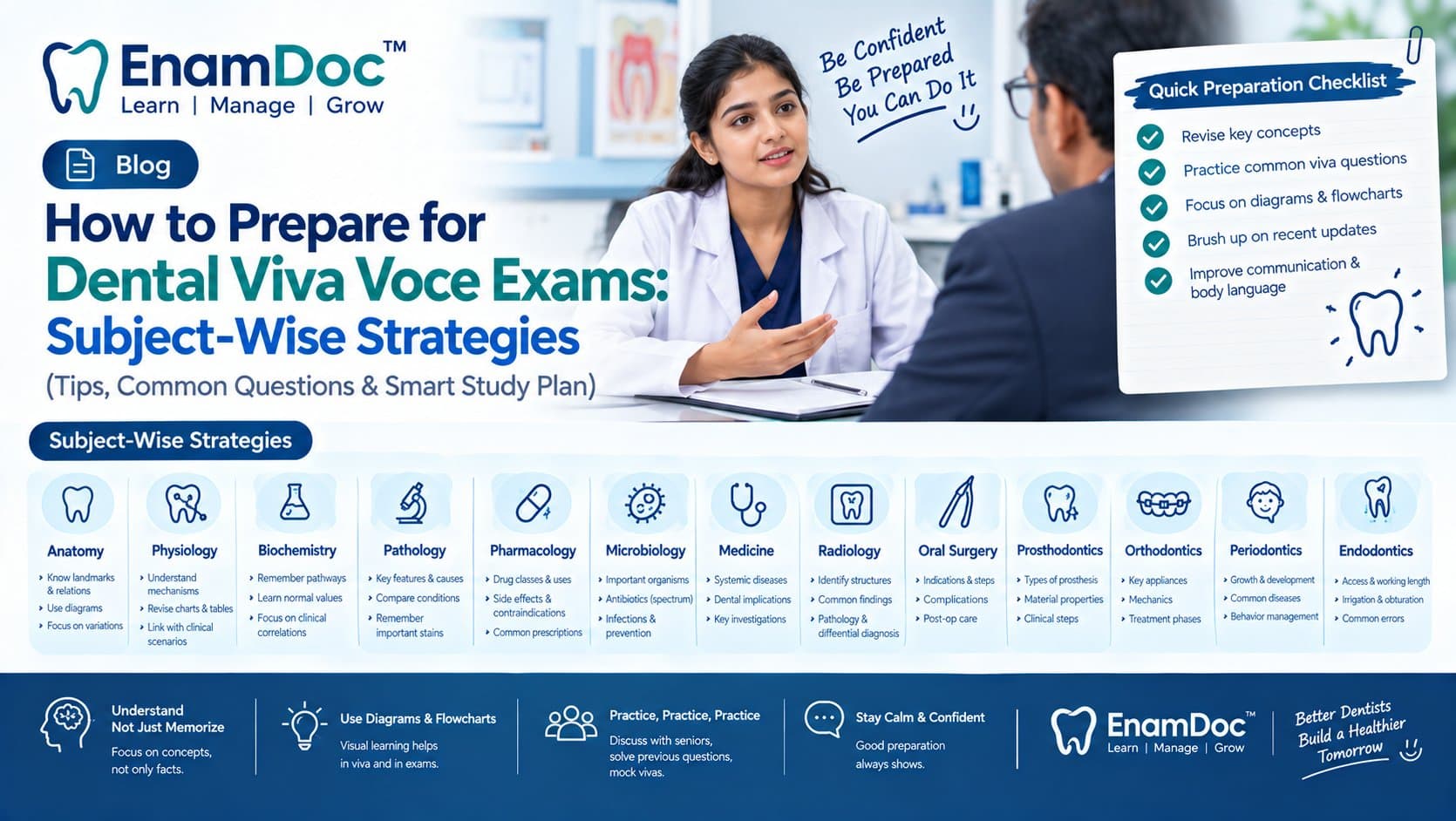
A viva doesn't test what you've memorized — it tests how you think under direct questioning. Here's a subject-wise approach to viva prep that actually holds up in the exam room.
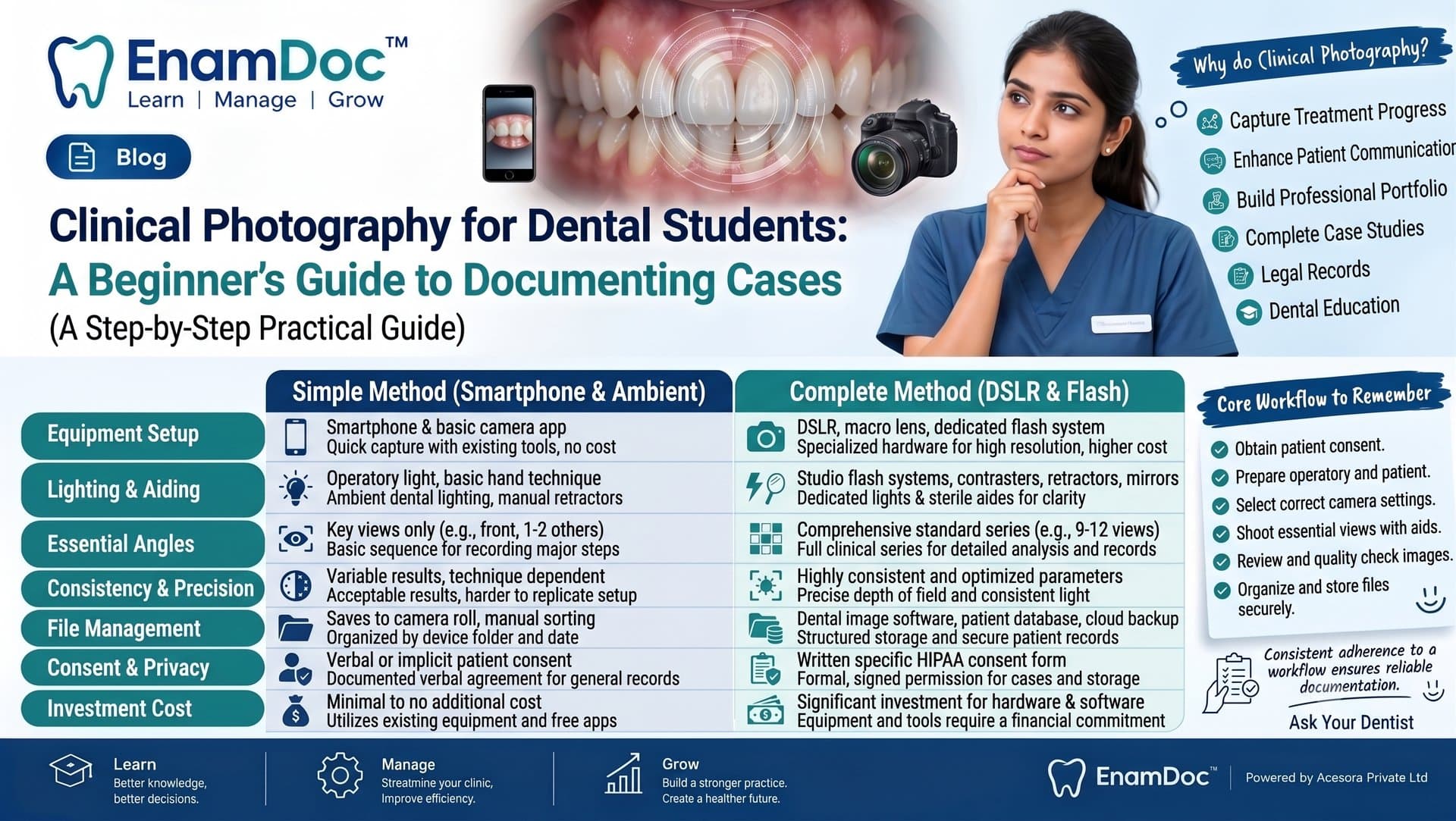
Good case documentation starts with good photography, and most BDS students are never formally taught it. Here's a practical, no-jargon guide to the angles, settings, and consent steps that make clinical photos actually usable.

Every MDS branch looks appealing in a brochure. Here’s a practical framework for weighing seat availability, clinical interest, income potential, and lifestyle before you rank your NEET MDS choices.
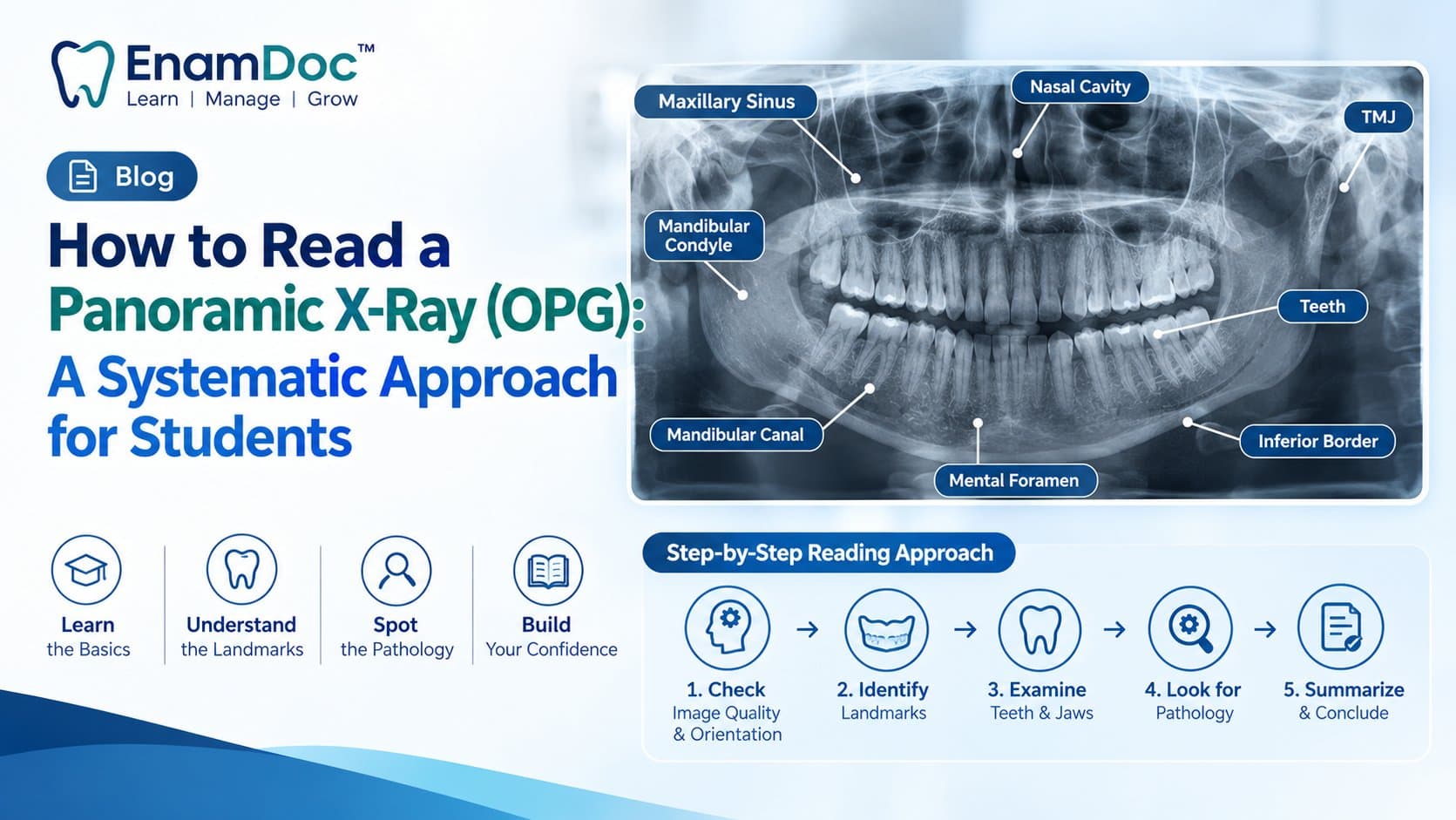
Staring at a panoramic X-ray during a viva and not knowing where to start is a specific, fixable problem. Here's the spiral-scan method that turns a blank film into a structured answer, plus the pitfalls that trip up nearly every student the first time.
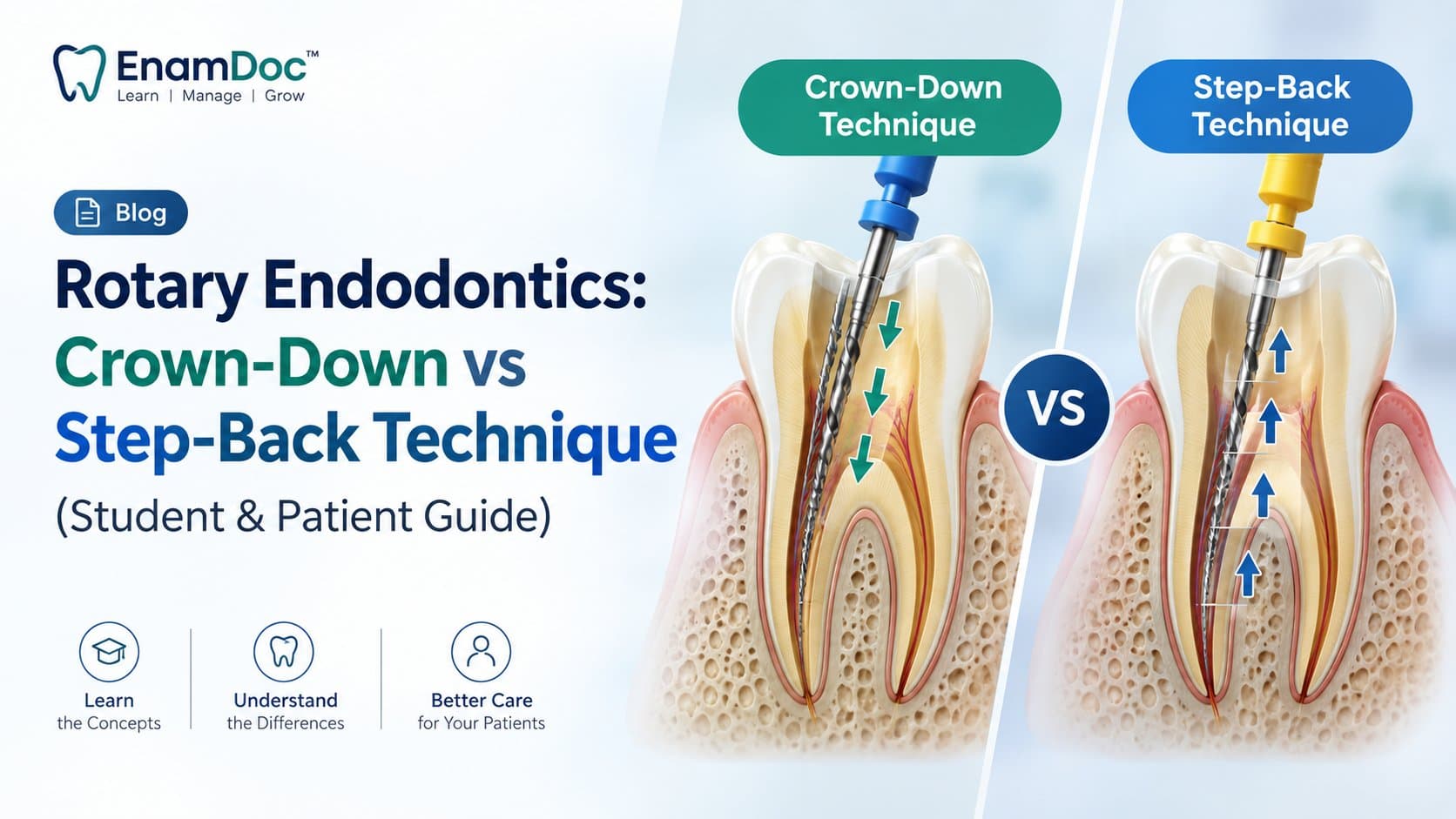
Curious why modern root canals are so fast, or preparing for endodontic vivas? A detailed guide comparing Crown-Down and Step-Back cleaning techniques, NiTi metallurgical tapers, file breakage prevention, and patient safety.
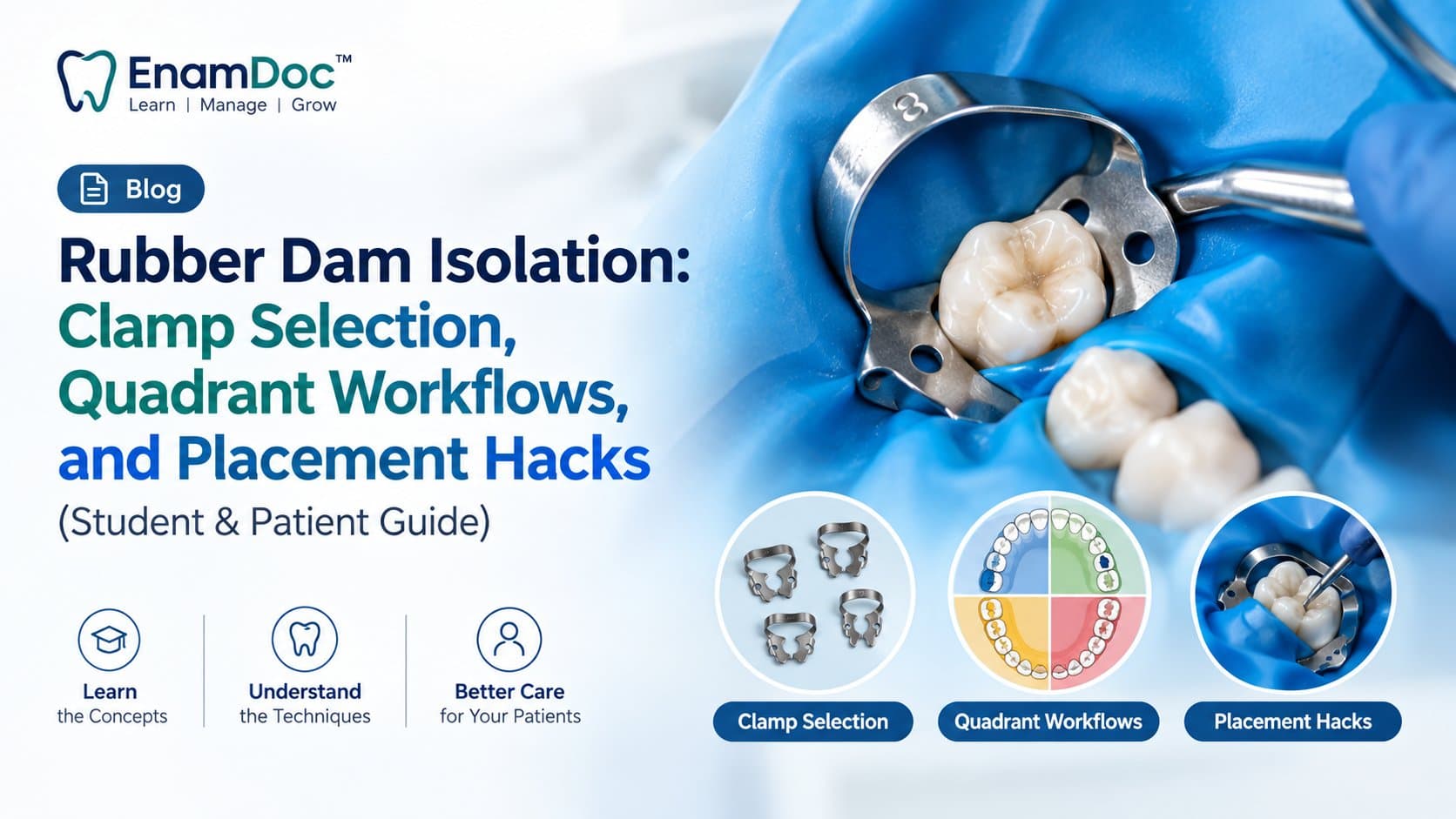
Why does your dentist stretch a rubber sheet over your mouth, and why is it mandatory for root canals? A practical clinical guide for dental students mastering clamp selection and winged vs. wingless placement, and patients curious about isolation comfort.

A rare case, documented and forgotten, helps no one's CV. Here's the actual process for turning a clinical case into a published case report — structure, consent, journals, and common rejection reasons.
A high NEET UG rank gets you into the counselling round. What actually determines whether the next five years were worth it is a shorter list than most rank lists suggest.

Every BDS batch has students eyeing licensing exams for the US, UK, Australia, or Canada instead of NEET MDS. Here's what INBDE, ORE, ADC, and NDEB actually require, as of 2026.
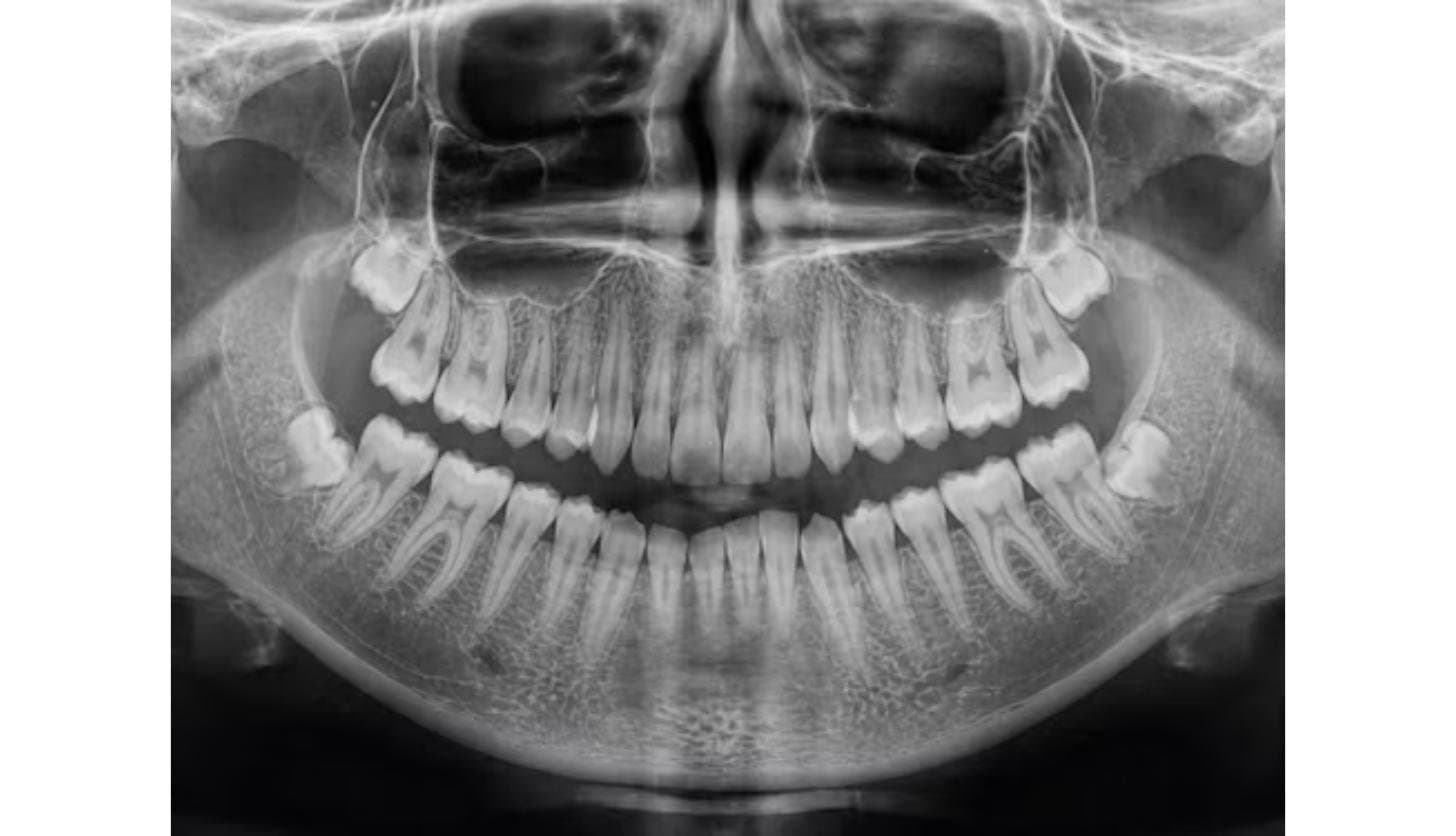
Winter's angulation, Pell and Gregory's ramus relationship and depth, and how they combine into real surgical difficulty — a working guide for reading an OPG and answering viva questions with confidence.
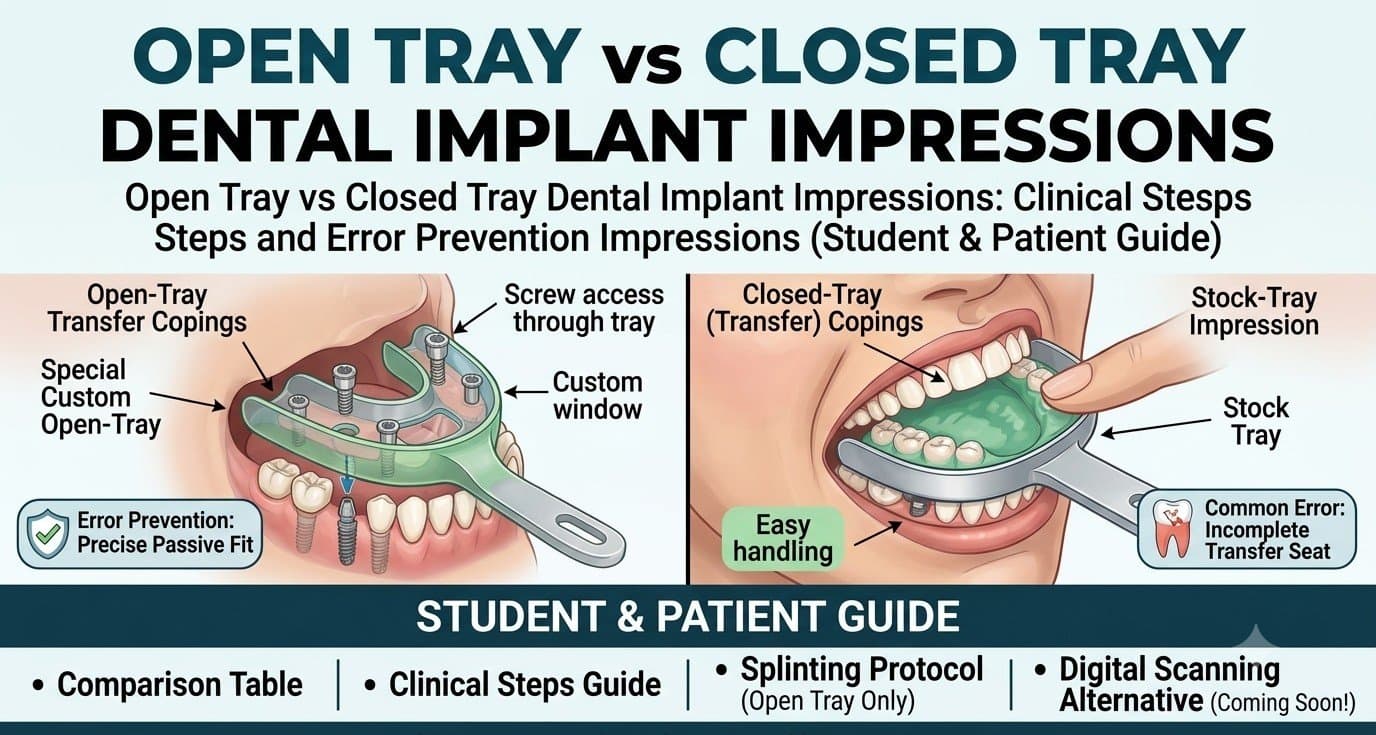
Wondering how dentists capture the exact position of a titanium implant, or revising for prosthodontics practicals? A complete guide comparing open tray (pick-up) and closed tray (transfer) techniques, coping splinting, and digital scanning alternatives.
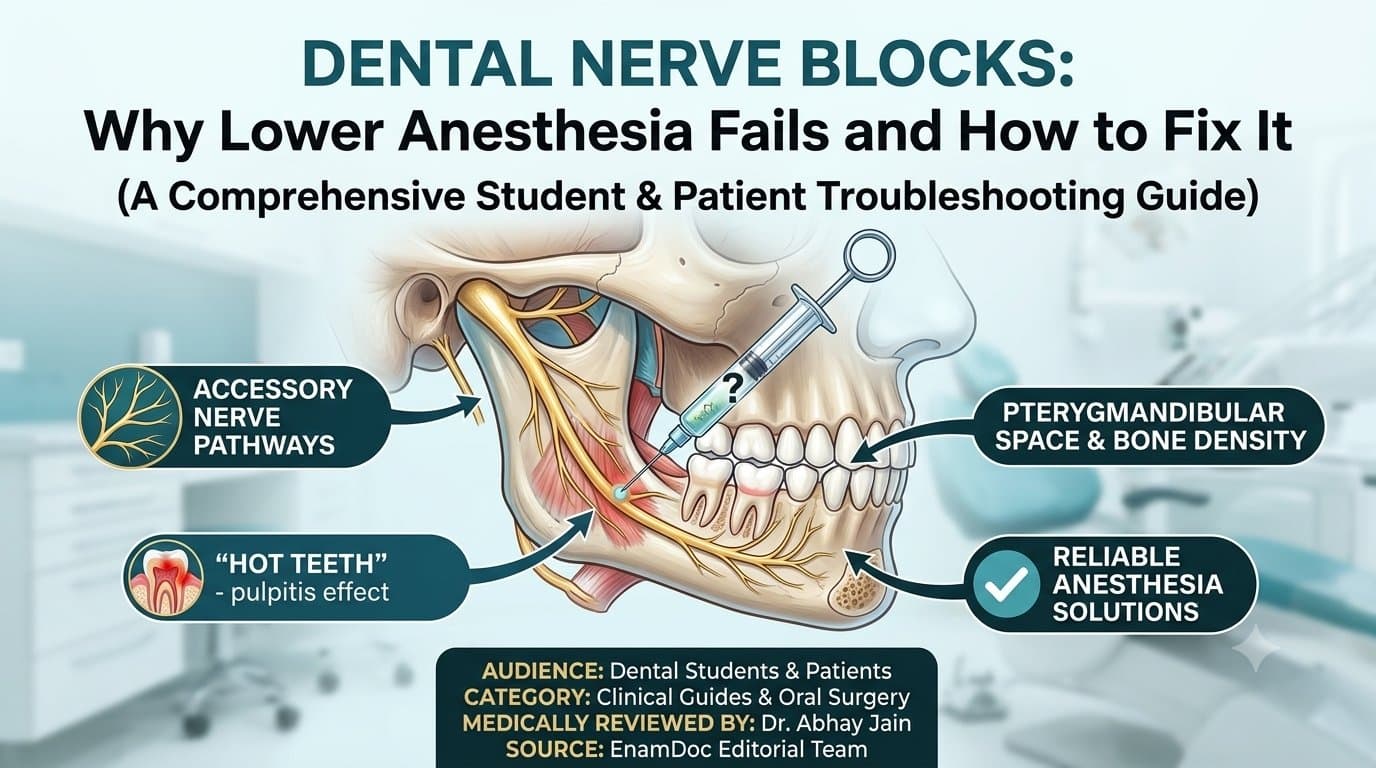
Ever wondered why your lower jaw takes multiple injections to numb, or preparing for oral surgery viva questions? A clinical breakdown of the Inferior Alveolar Nerve Block (IANB), why "hot teeth" resist local anesthesia, accessory nerve pathways, and Gow-Gates alternatives.
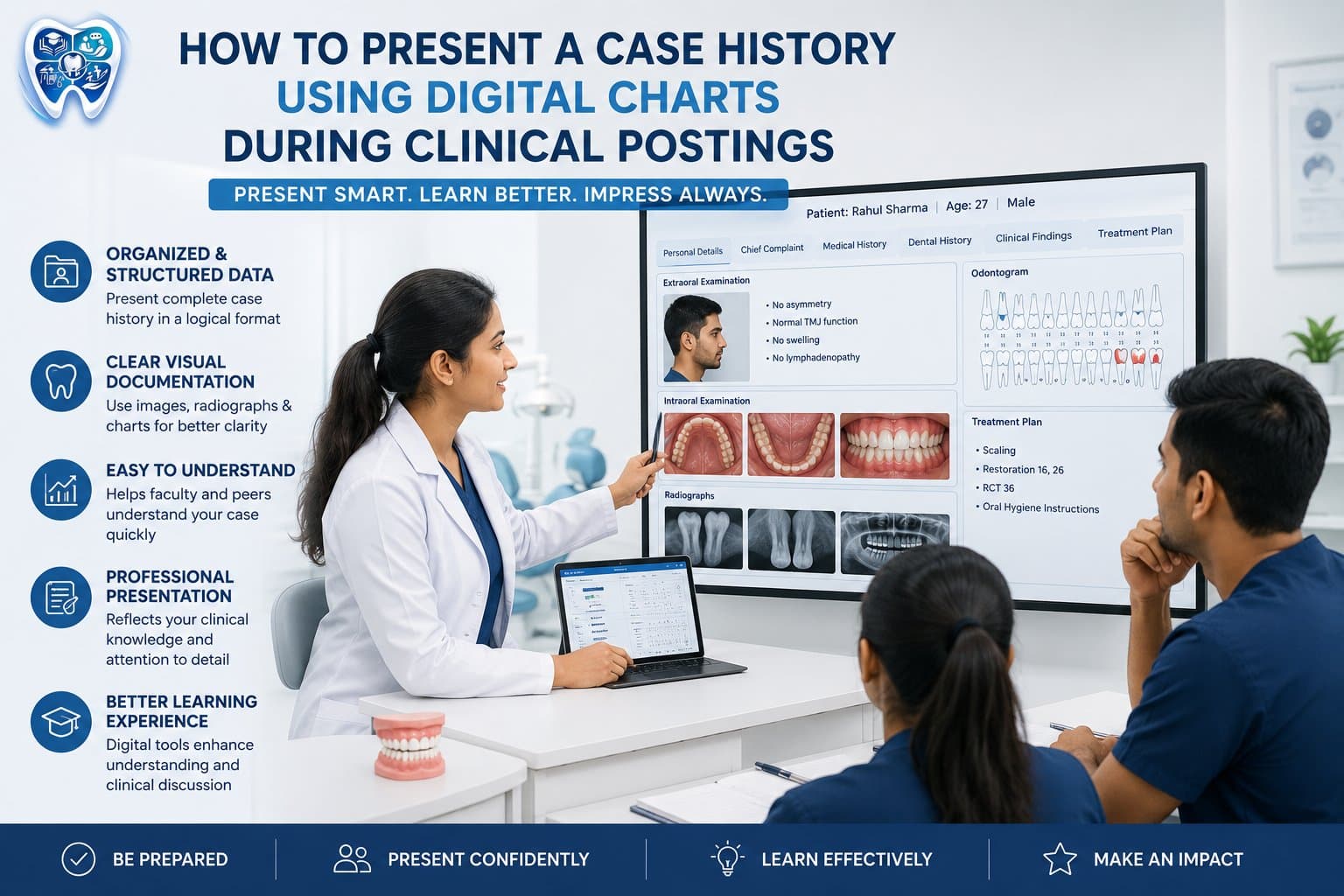
Say goodbye to illegible rough notebooks. Discover how dental interns and postgraduates can structure digital charts, present radiologic and intraoral findings seamlessly, and impress senior faculty during clinical postings.
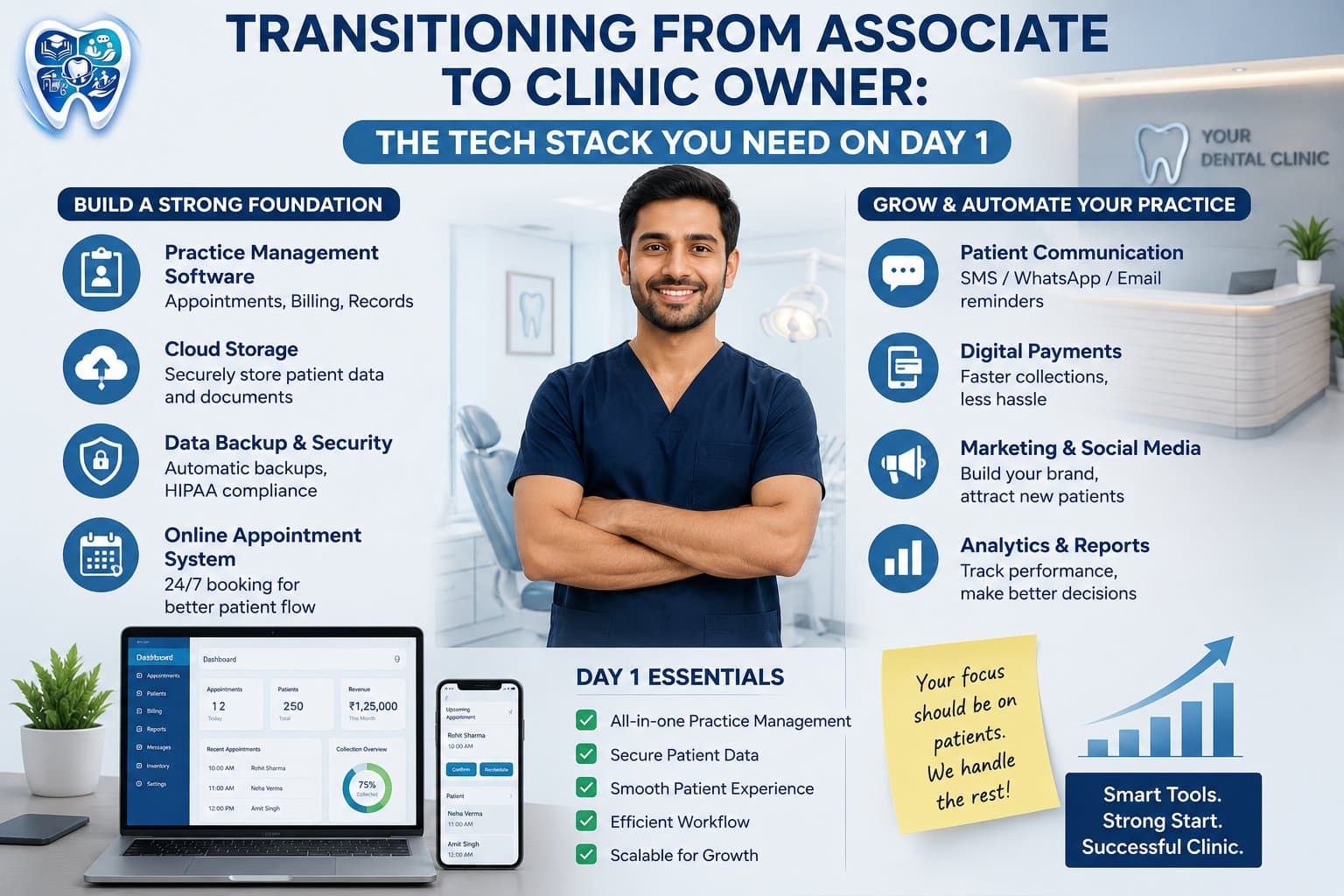
Stepping out to launch your own dental practice? Cut through marketing hype with our essential Day 1 tech stack: cloud practice management, digital RVG sensors, automated billing, and reliable hardware.
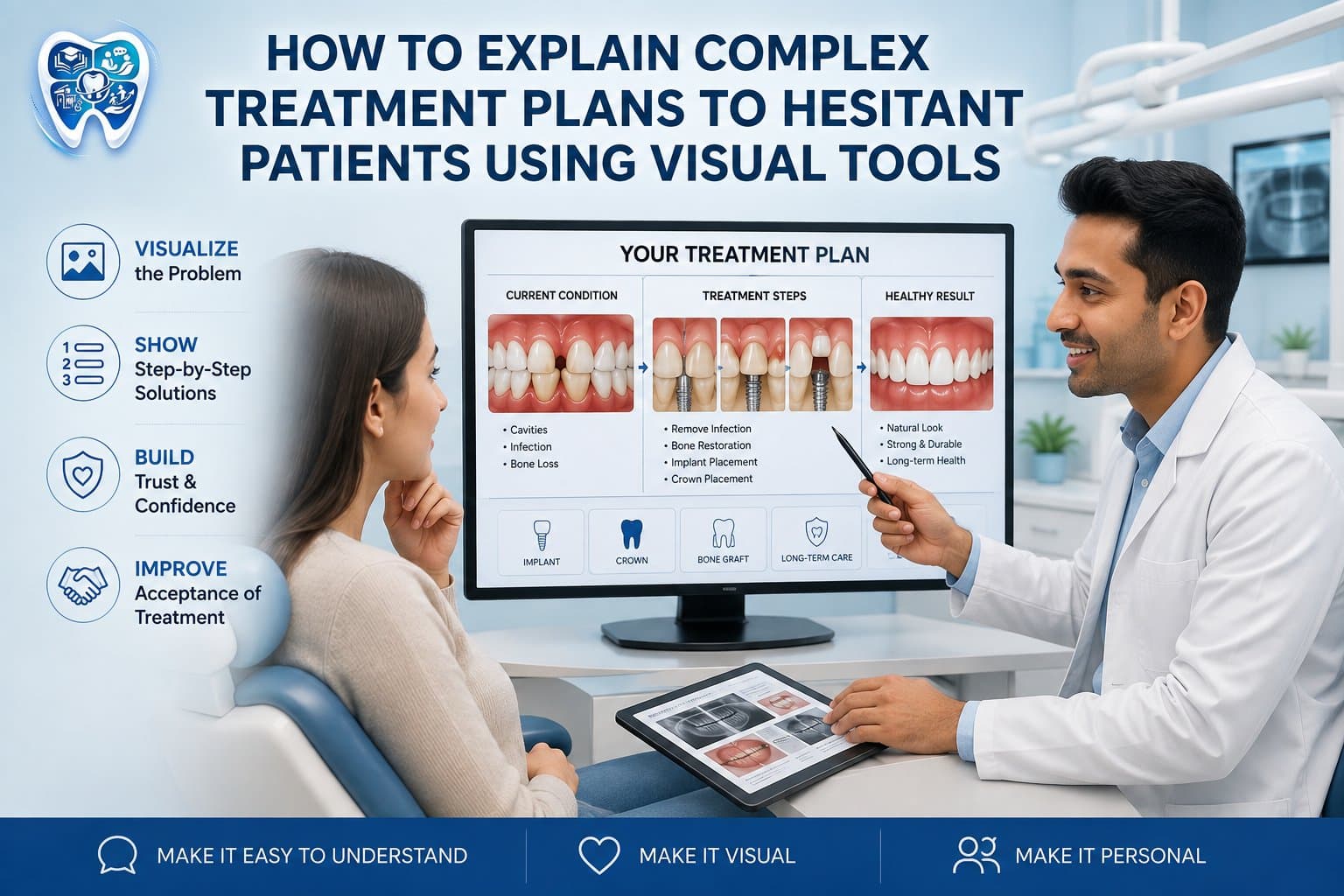
Overcome patient sticker shock and treatment anxiety. Learn how to leverage macro intraoral photography, digital 3D scans, and phased financial roadmaps to boost case acceptance ethically.
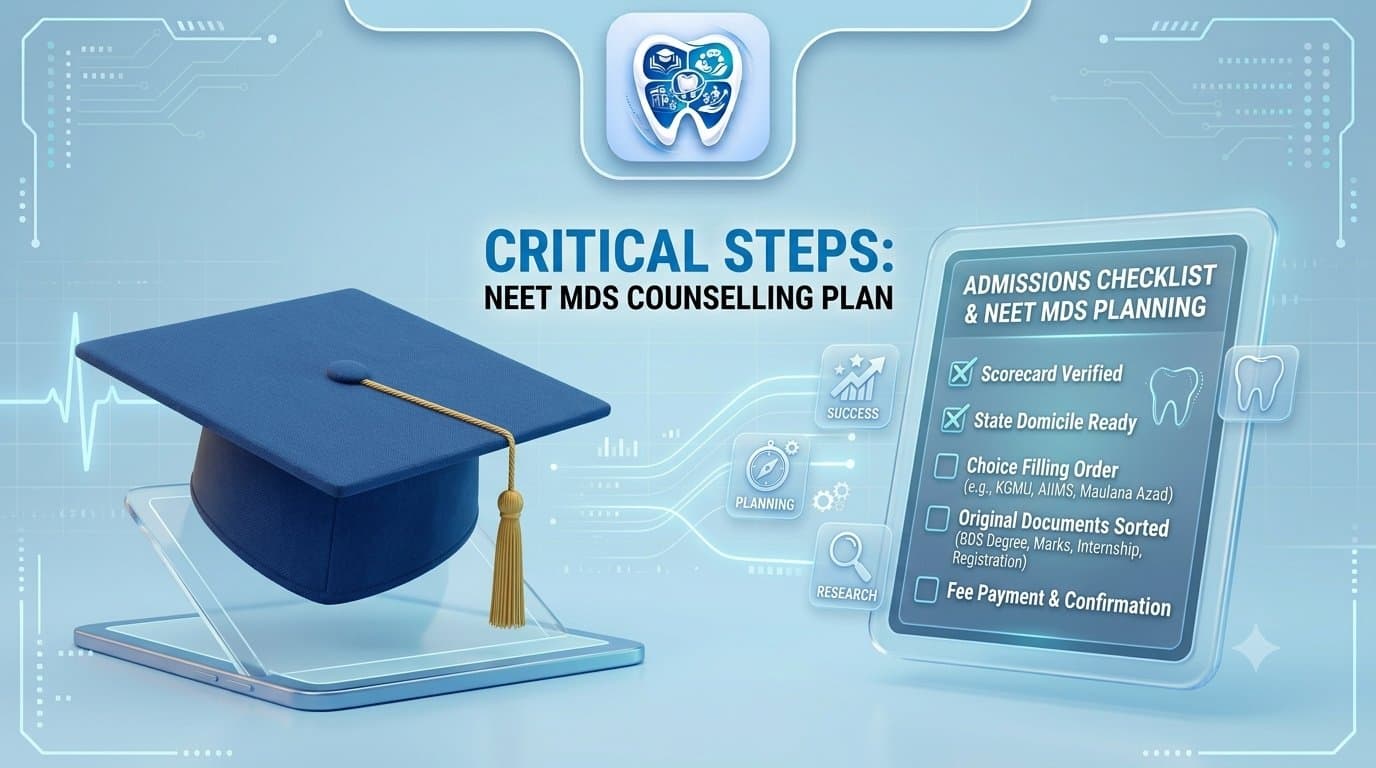
Round 1 seat allotment is out and reporting closes September 1. Here's the full round-by-round schedule ahead, and what's reversible if you don't get the seat you wanted.
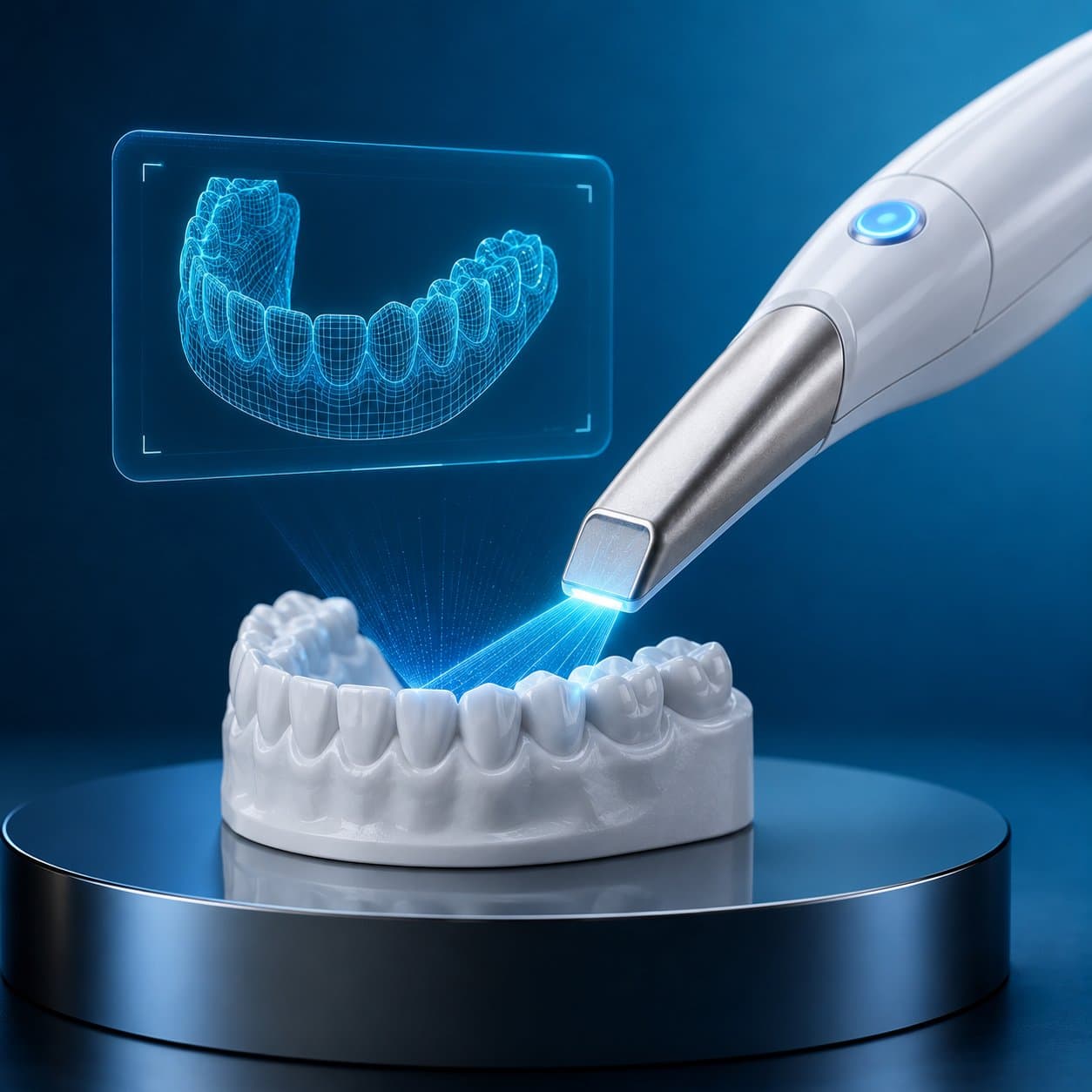
Clinics are moving to scanners and same-day crowns faster than dental colleges are teaching it. Here's the baseline every new graduate should already know.
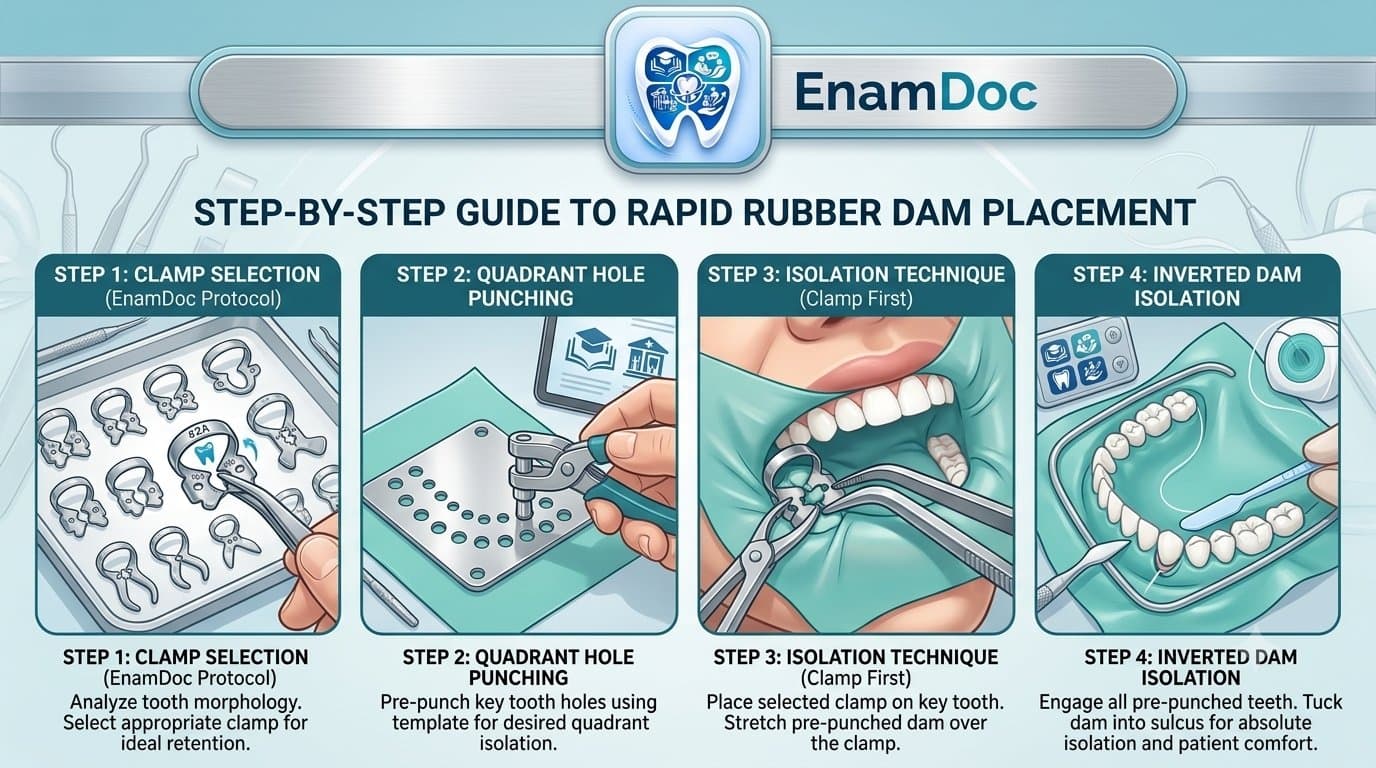
Master rubber dam isolation in under two minutes with practical tips on clamp selection, accurate hole punching, quadrant isolation workflows, and patient communication.
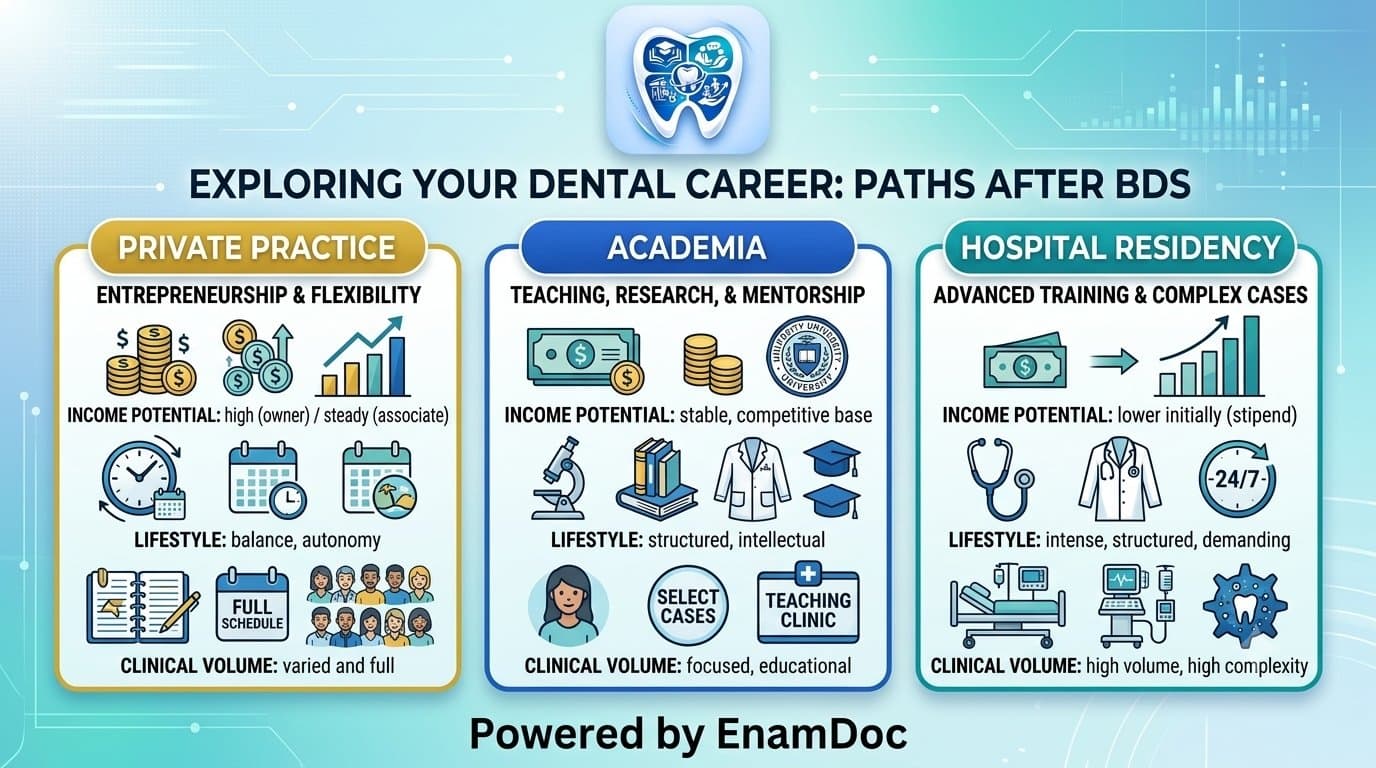
Navigate your post-BDS career path by comparing private practice, dental academia, and hospital residencies across salary, work-life balance, clinical exposure, and long-term growth.
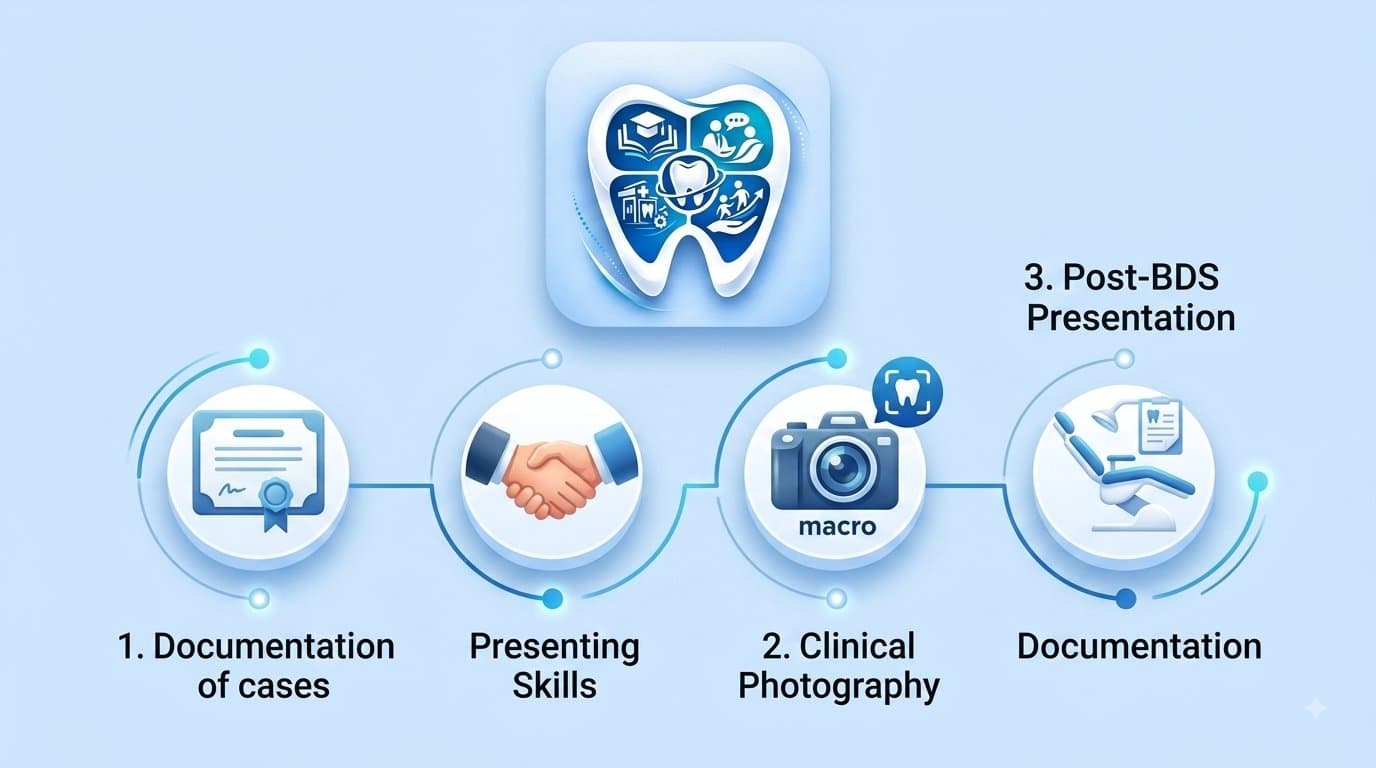
Learn how to create an impactful dental clinical portfolio post-BDS. Master case documentation, dental photography, and presentation skills to stand out to hiring clinics.
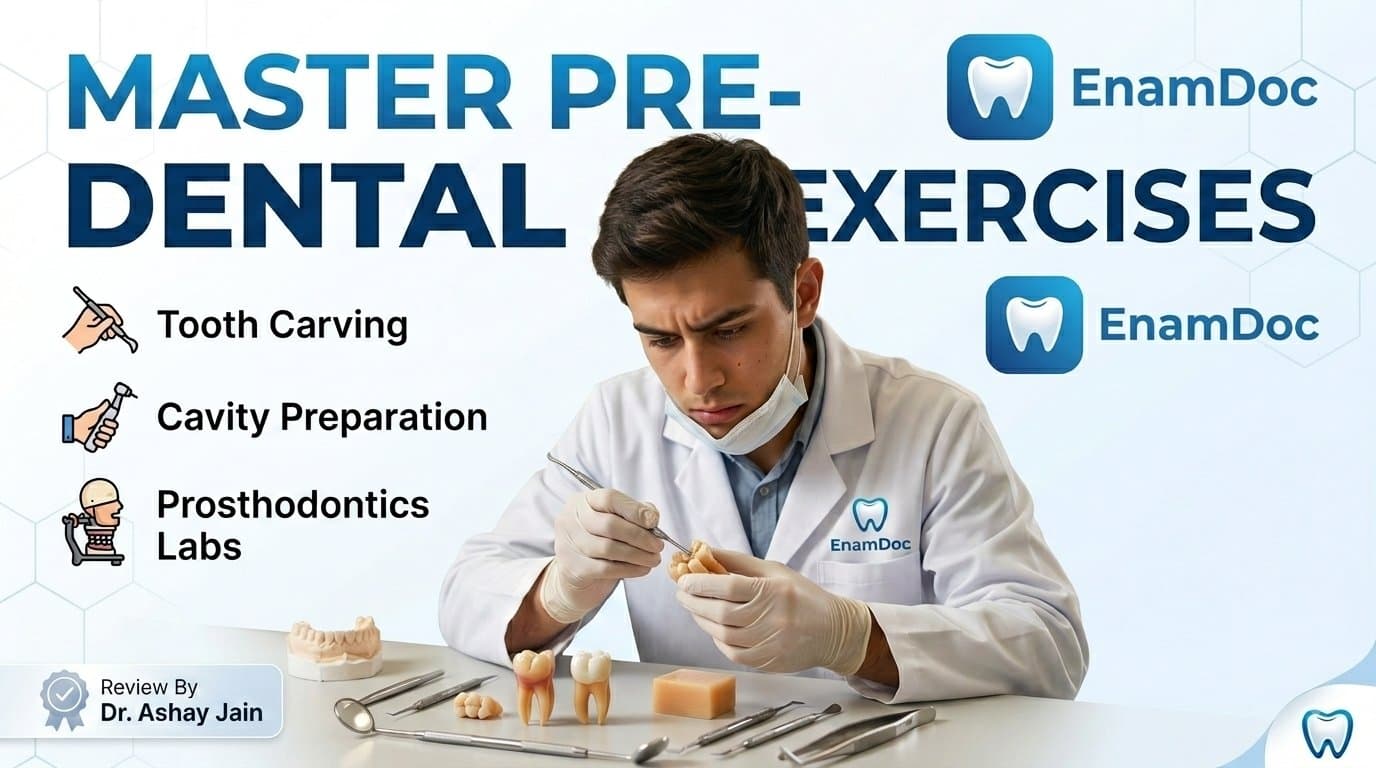
Struggling with phantom head labs, wax blocks, or Class II cavity prep? Discover practical tips, ergonomic habits, and step-by-step techniques to ace pre-clinical dental exercises in your early BDS years.
The viva is the exam students fear most and prepare for least well — because they revise facts and get tested on reasoning.
Clinical postings are where BDS stops being theory. Most students waste the first year of them being invisible.
Nobody teaches you how to get hired. Here is how associate positions actually work, what the pay structures mean, and what to check before you sign.
By third year most students have a phone full of PDFs they will never find again. Ten minutes of structure is worth more than another download.
Twenty questions a day is 7,300 in a year. Nobody cramming in the last two months gets near that — and consistency is easier than intensity.

Textbooks teach the classic presentation. Real patients rarely present classically — and that gap is where new graduates struggle.
Most students never ask, because they assume a senior is too busy. Most seniors say yes — the ask just has to be small enough.
Three years of MDS has a price tag and a delay attached. Starting practice has a ceiling. Neither is the obvious answer.
Every BDS batch assumes MDS or nothing. The seats say otherwise — and several alternatives are better than their reputation.
Examiners are marking your reasoning, not your conclusion. A fixed structure is what makes the reasoning visible.
Most missed findings on a dental X-ray are not subtle. They are outside the area the student was looking at.
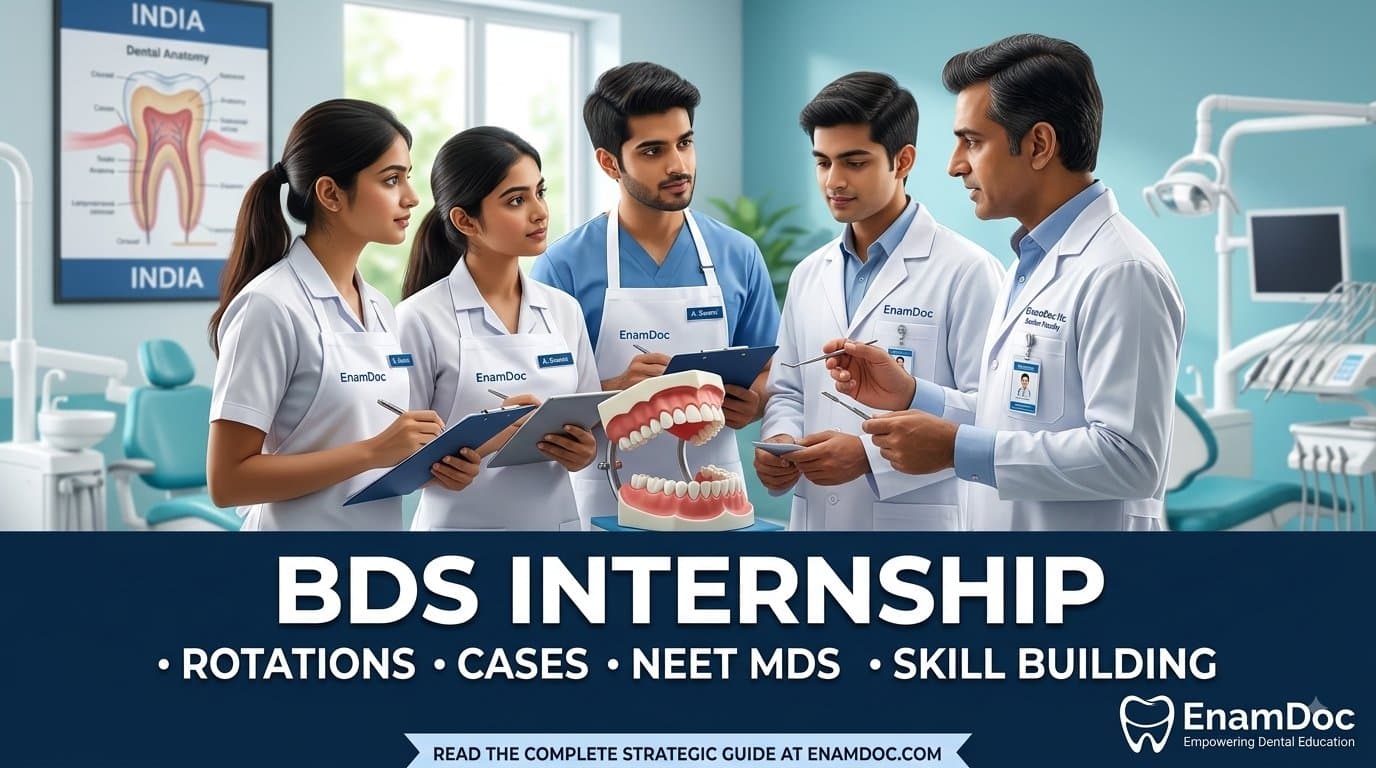
Internship is the last year where mistakes are supervised and free. Most graduates waste it. Here is how not to.
Scoring 70% on a question bank tells you almost nothing. What you do with the 30% is where the marks are.
You do not need every recommended book. Here is what to buy, what to borrow, and what to skip entirely for each BDS subject.
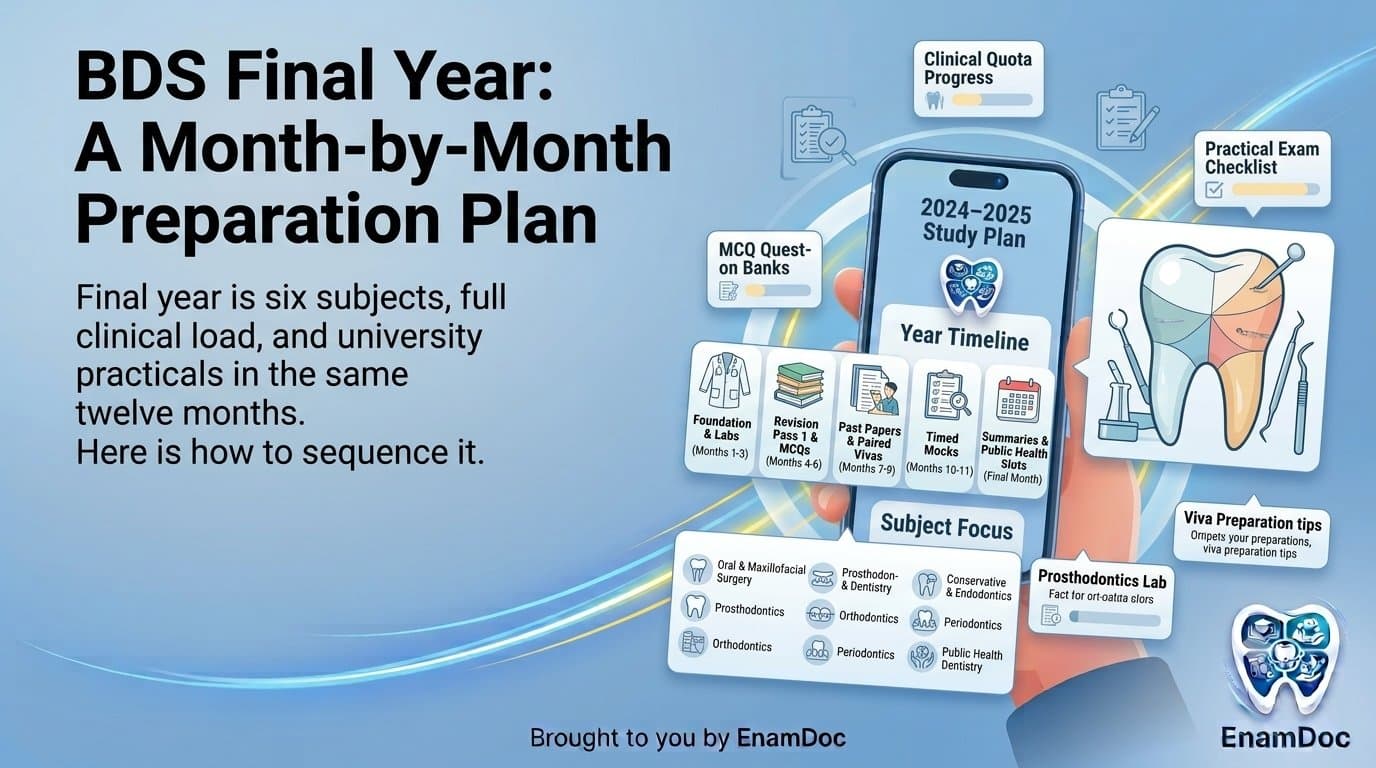
Final year is six subjects, a full clinical load and university practicals in the same twelve months. Here is how to sequence it.
Also in the journal
Next
Searchable BDS material, a daily MCQ quiz, and real clinical cases you can follow from a practising dentist. Free to join, free to stay.
Study material, free